
Hit enter to search or ESC to close
12 March 2026
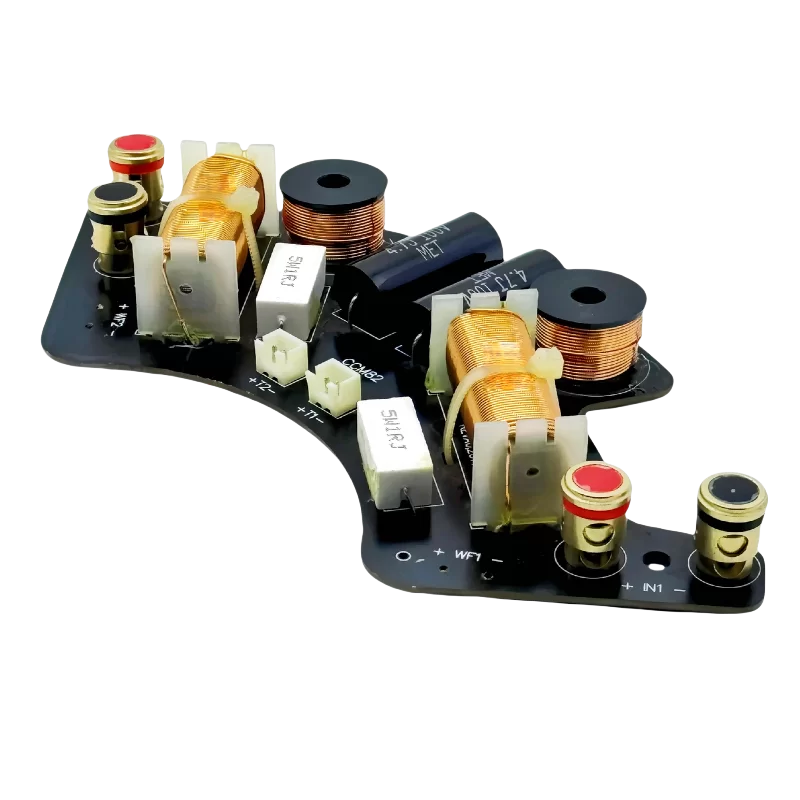
The front speaker crossover is a crucial component in any audio system, particularly for high-fidelity sound reproduction. It's the network that directs audio signals to the appropriate drivers – tweeters and woofers – ensuring each handles the frequencies it’s designed for. This article will delve into the intricacies of front speaker crossovers, covering their function, types, design considerations, and how to choose the right one for your setup. Understanding your speaker crossover is essential for optimizing sound quality and protecting your speakers.
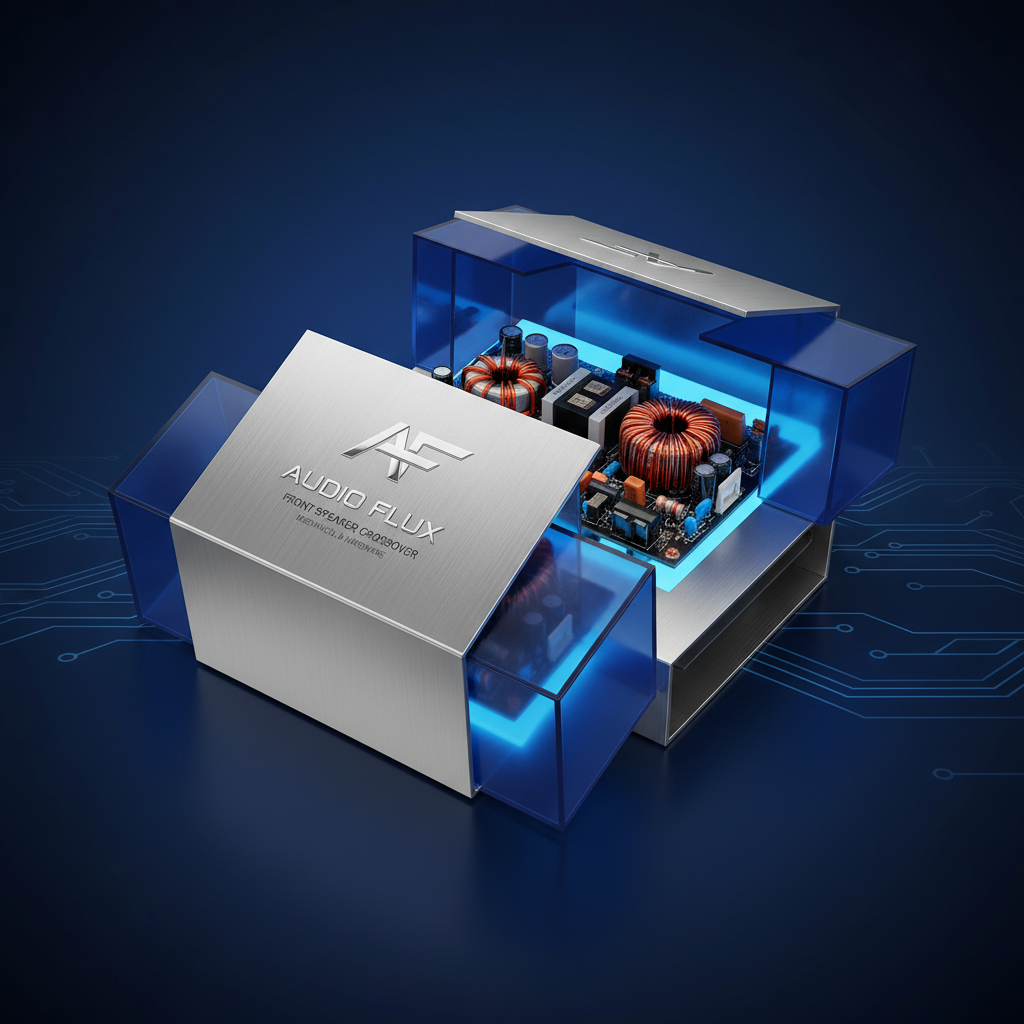
Simply put, a front speaker crossover divides the full-range audio signal from your amplifier into separate frequency bands. Higher frequencies are sent to the tweeter, responsible for crisp highs, while lower frequencies are directed to the woofer, which handles the powerful bass and mid-range. Without a crossover, all frequencies would be sent to both drivers. This would cause distortion, damage the tweeter (due to attempting to reproduce low frequencies), and result in muddy, unclear sound. The crossover's components – typically capacitors, inductors, and resistors – work together to filter and shape the audio signal, ensuring each driver operates within its optimal range. A well-designed front speaker crossover is paramount to achieving clear, balanced, and accurate audio.
Key Benefit: A crossover protects your tweeter from damage by preventing it from attempting to reproduce low-frequency sounds.
There are three main types of front speaker crossovers: passive, active, and digital. Each has its own advantages and disadvantages. Passive crossovers are the most common and are placed inside the speaker cabinet. They require no external power source, making them simple to implement. Active crossovers, on the other hand, are placed before the amplifiers and require external power. They offer greater control and flexibility but are more complex to set up. Digital crossovers are the most advanced, offering precise control and sophisticated filtering options, but they also tend to be the most expensive.
Crossover Type Comparison:
• Passive: Simple, no external power, lower cost.
• Active: More control, greater flexibility, requires external power.
• Digital: Most precise, sophisticated filtering, highest cost.
Selecting the ideal front speaker crossover depends on several factors, including your speakers’ specifications, your amplifier’s capabilities, and your listening preferences. Consider the impedance of your speakers and the power handling capacity of your amplifier. The crossover’s slope (measured in dB/octave) determines how quickly frequencies are attenuated – a steeper slope offers more precise separation. The crossover frequency is the point at which frequencies are split between the tweeter and woofer; this is typically determined by the drivers’ individual frequency response characteristics. For example, a tweeter might have a crossover frequency of 3kHz. XCD Magnetic offers a range of crossover solutions designed to enhance your audio experience.
Designing or selecting a front speaker crossover requires careful attention to detail. Component quality is crucial; using high-grade capacitors, inductors, and resistors will significantly improve sound quality. The layout of the components within the crossover network also matters – minimizing interference and signal path length is important. Consider the driver’s Thiele/Small parameters to accurately determine the optimal crossover frequency and slope. Properly designed speaker crossovers from reputable manufacturers like XCD Magnetic often incorporate these considerations, providing a superior audio experience.
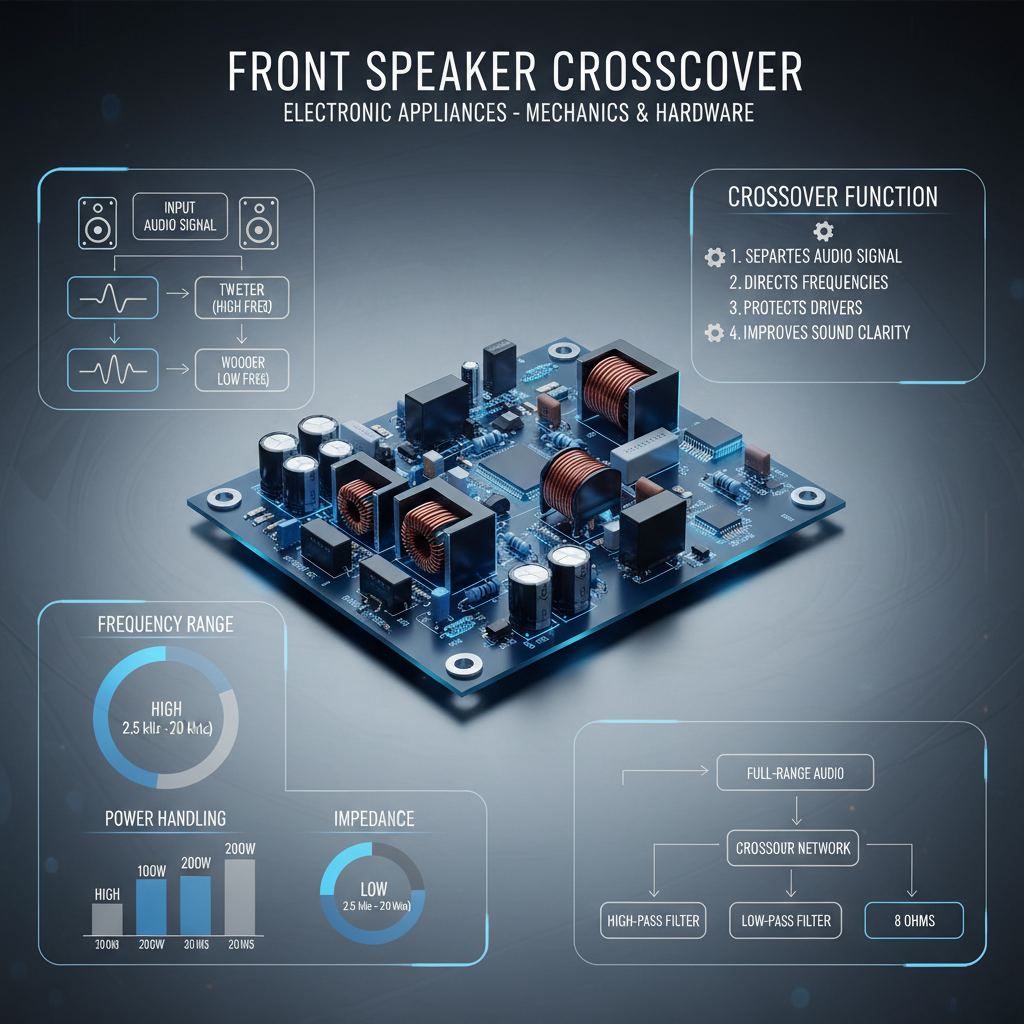
A high-quality front speaker crossover delivers numerous benefits, including improved sound clarity, enhanced stereo imaging, and increased speaker longevity. By ensuring each driver operates within its optimal frequency range, the crossover minimizes distortion and maximizes efficiency. This results in a more balanced and accurate sound reproduction, allowing you to fully appreciate the nuances of your music or movies. Investing in a well-designed crossover is a worthwhile upgrade for any audio enthusiast.
The front speaker crossover is a vital component in achieving high-quality audio. Understanding its function, types, and design considerations is crucial for optimizing your sound system. XCD Magnetic provides a wide range of reliable and high-performance crossovers to enhance your listening experience. Don’t underestimate the power of a well-designed crossover – it’s the key to unlocking the full potential of your speakers.
A 2-way crossover splits the audio signal into two frequency bands – one for the tweeter and one for the woofer. A 3-way crossover, however, divides the signal into three bands – typically for a tweeter, a midrange driver, and a woofer. 3-way crossovers offer more precise control and can result in improved clarity and detail, especially in systems with dedicated midrange drivers. The choice depends on the speaker design and desired level of sonic precision.
Yes, it’s possible to build your own front speaker crossover, but it requires a good understanding of electronics, circuit design, and speaker parameters. You’ll need to select the appropriate components (capacitors, inductors, resistors) and carefully calculate their values based on your drivers’ specifications and desired crossover frequency. There are numerous online resources and calculators available to assist you. However, a poorly designed crossover can actually degrade sound quality, so it’s important to proceed with caution.
Crossover slope, measured in dB/octave, describes how quickly the signal is attenuated (reduced) outside of the driver’s intended frequency range. A higher slope (e.g., 24 dB/octave) means a steeper attenuation, providing more precise separation between drivers but potentially introducing phase shift. A lower slope (e.g., 6 dB/octave) offers a more gradual transition, but may result in some overlap between driver frequencies. The optimal slope depends on the speaker design and listening preferences.
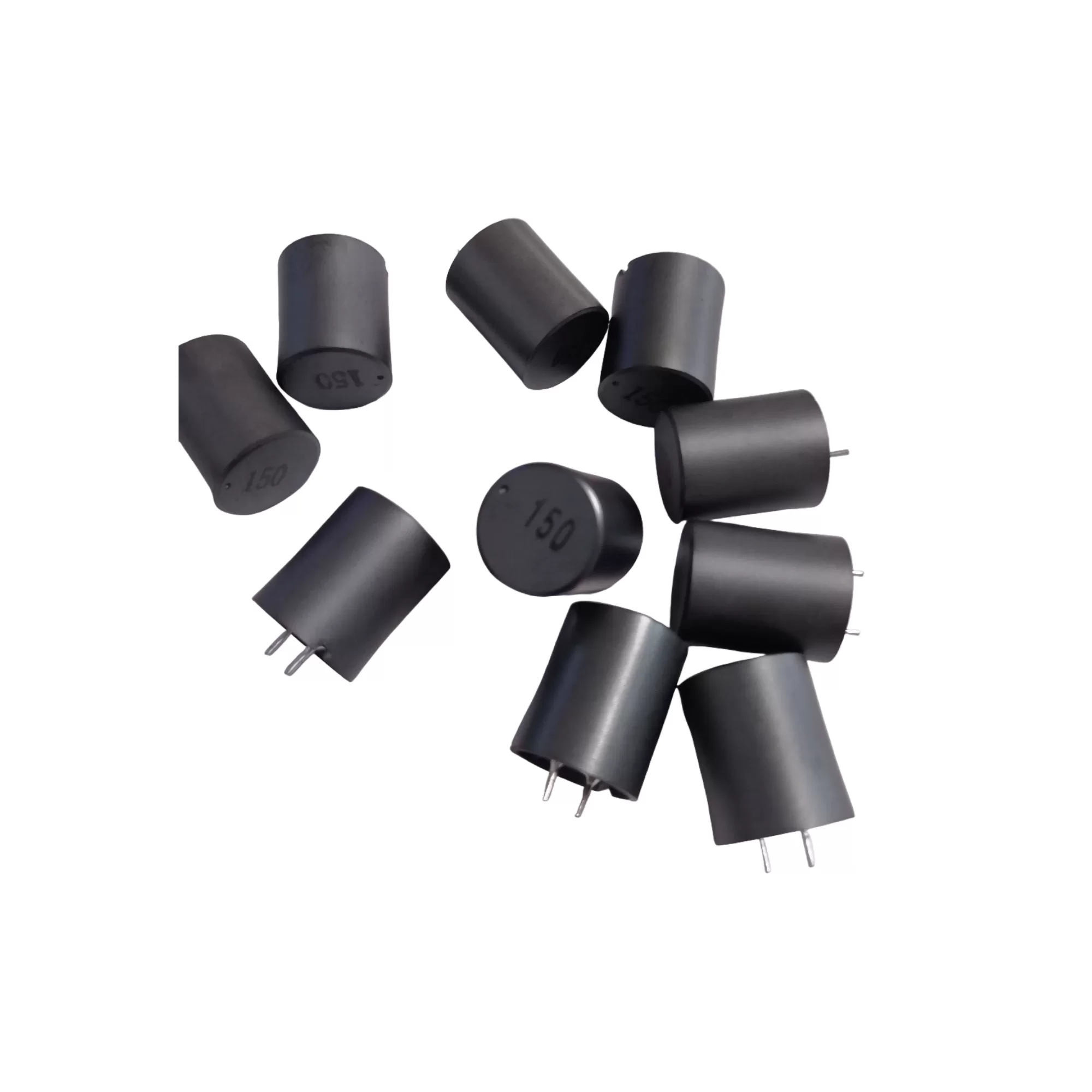
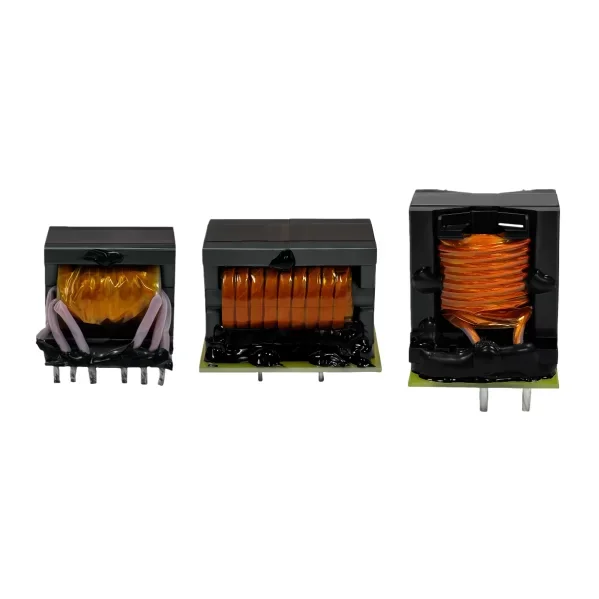
Component quality significantly impacts crossover performance. High-quality capacitors, inductors, and resistors have lower tolerances and exhibit better sonic characteristics. For example, using film capacitors instead of electrolytic capacitors can improve clarity and reduce distortion. Similarly, air-core inductors are generally preferred over iron-core inductors due to their lower distortion. Investing in high-quality components can result in a noticeable improvement in sound quality.