
Hit enter to search or ESC to close
3 March 2026
Achieving optimal sound quality in any audio system, particularly those featuring subwoofers, relies heavily on the effective management of frequencies. This is where the electronic subwoofer crossover plays a crucial role. These devices intelligently divide the audio signal, directing low frequencies to the subwoofer for powerful bass reproduction, while allowing higher frequencies to other speakers. A properly implemented crossover ensures a clear, balanced soundstage and prevents distortion. Selecting the right crossover is essential for maximizing the performance of your subwoofer.
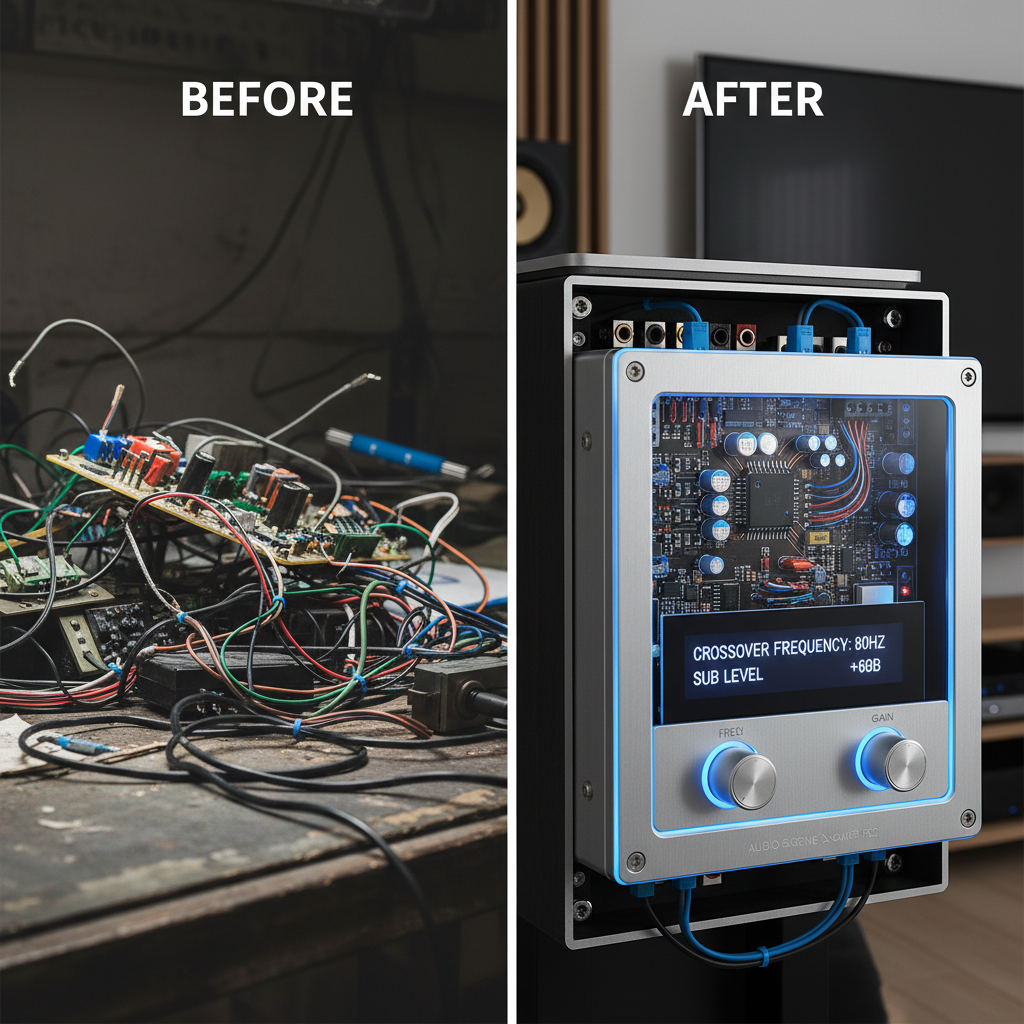
An electronic subwoofer crossover is an electronic filter circuit that separates audio signals based on frequency. Unlike passive crossovers, which use components like resistors, capacitors, and inductors, electronic crossovers utilize active components like operational amplifiers and filters, often requiring an external power source. This allows for greater precision, flexibility, and control over the crossover point and slope. They’re fundamental in ensuring the subwoofer handles only the frequencies it's designed for, protecting both the subwoofer and other speakers from damage. The crossovers offered by XCD Magnetic provide superior signal processing and clarity.
Key Benefits: Precision frequency division, flexible control, protection for speakers, enhanced sound clarity, and optimized subwoofer performance.
Electronic subwoofer crossovers are available in various forms. The most common types include:
The choice depends on your system complexity and desired level of customization. XCD Magnetic specializes in providing high-quality components for building custom crossover solutions.
Crossover Type Comparison:
• Built-in: Simple, convenient, limited flexibility.
• Separate Processors: Greater control, more complex setup.
• DSPs: Maximum flexibility, advanced features, higher cost.
Understanding the key parameters of an electronic subwoofer crossover is crucial for achieving optimal results. These include:
Choosing the right crossover depends on several factors, including your listening environment, the type of music you enjoy, and the capabilities of your existing audio equipment. Consider the room size and acoustics. Larger rooms often benefit from lower crossover frequencies. Experimentation is key to finding the optimal settings for your system. At XCD Magnetic, we offer expert guidance to help you select the best components and optimize your subwoofer crossover settings.
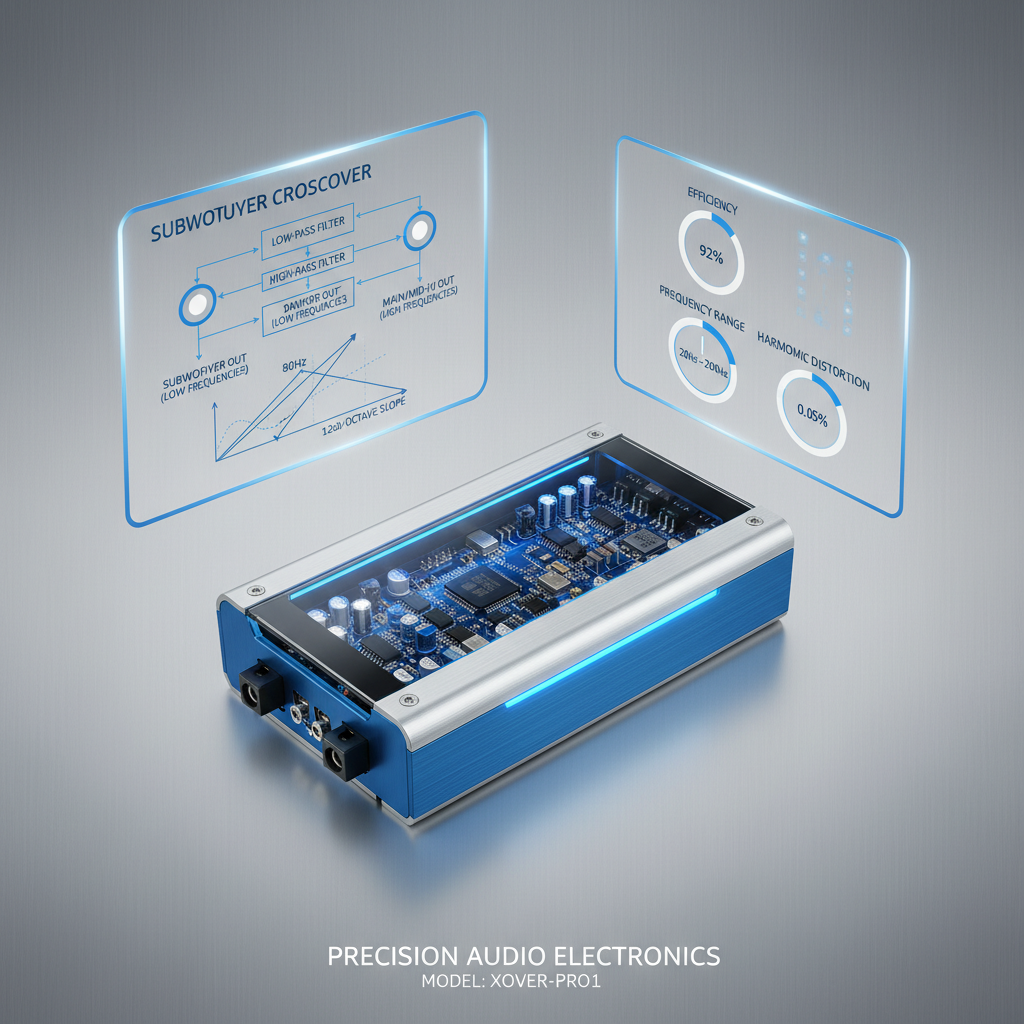
Investing in a quality electronic subwoofer crossover is a crucial step toward achieving superior audio performance. By precisely managing frequencies and protecting your speakers, a well-chosen crossover unlocks the full potential of your subwoofer. Explore the range of components and expertise available at XCD Magnetic to elevate your listening experience.
The ideal crossover frequency varies depending on the specific speakers and room acoustics. However, a common starting point is between 80Hz and 120Hz. Lower frequencies are generally preferred for larger rooms or if your main speakers have limited low-frequency response. Experimentation is crucial. Start with 80Hz and gradually increase it, listening for the point where the transition between the subwoofer and main speakers sounds seamless and natural. Avoid frequencies that cause muddiness or a loss of clarity in either the bass or mid-range.
Crossover slope refers to the rate at which frequencies are attenuated (reduced) beyond the crossover frequency. It's measured in decibels per octave (dB/octave). A steeper slope (e.g., 24dB/octave) provides a more abrupt cutoff, preventing frequencies from overlapping between the subwoofer and other speakers. This can result in a cleaner, more defined sound. However, a shallower slope (e.g., 6dB/octave) can create a smoother transition but may lead to some frequency overlap. The optimal slope depends on the characteristics of your speakers and room.
Phase alignment ensures that the sound waves from the subwoofer and other speakers arrive at your ears at the same time. If the phase is incorrect, the sound waves can cancel each other out, resulting in a loss of bass or a muddy sound. Most electronic crossovers offer phase control adjustments (usually 0° and 180°). Experimenting with these settings can significantly improve the overall sound quality and bass response. Proper phase alignment creates a more cohesive and impactful listening experience.