
Hit enter to search or ESC to close
5 August 2025
What are the differences between the 40-grade and 95-grade magnetic core materials used in transformers? Taking Chinese suppliers SSP-4 (40 material) and SSP-95 (95 material) as examples, here are the main differences between the two:
1. The magnetic permeability of 40 and 95 materials is different. The magnetic permeability of SSP-4 material is 2300, while that of SSP-95 material is 3300, resulting in different AL values.
Taking EE25 as an example, the AL value for SSP-4 material is 1950, while for SSP-95 it is 2700. If the inductance and number of turns of a transformer remain unchanged, switching to SSP-95 material will result in a larger air gap in the transformer under open air gap conditions.
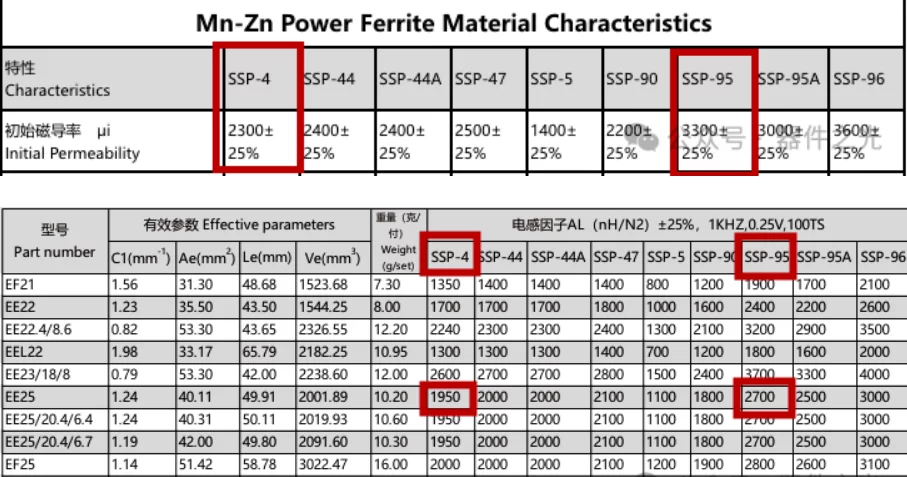
2. 40, 95 materials have different saturation flux densities.
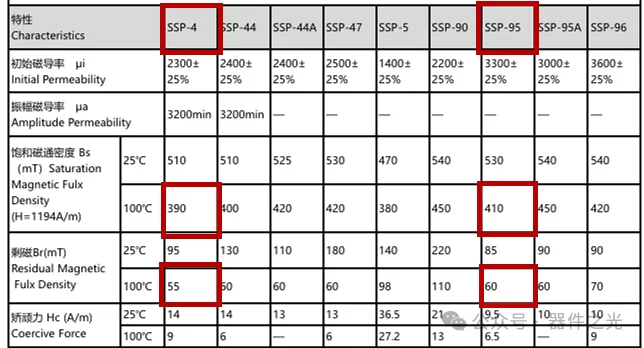
At 100°C, the saturation flux density of SSP-4 material is 390, while SSP-95 material can reach 410 (considering the actual operating conditions of transformers, the saturation flux density at 100°C is commonly used as a reference).
At 100°C, the remanence of SSP-4 material is 55, while that of SSP-95 material is 60. In actual operation, transformers are constantly switched on and off. The (Bs-Br) value used in design is 335 for SSP-4 material and 350 for SSP-95 material.
3. The power consumption of the 40 and 95 materials differs. At 100°C, the power consumption of the SSP-4 material is 410, while that of the SSP-95 material is 310, a full quarter lower than that of the SSP-4 material.
At 120°C, the power consumption of SSP-4 material is 500, while that of SSP-95 material is 350, with a difference of 150, which is 30% of SSP-4 material. The difference in material power consumption directly affects the temperature rise of the transformer.
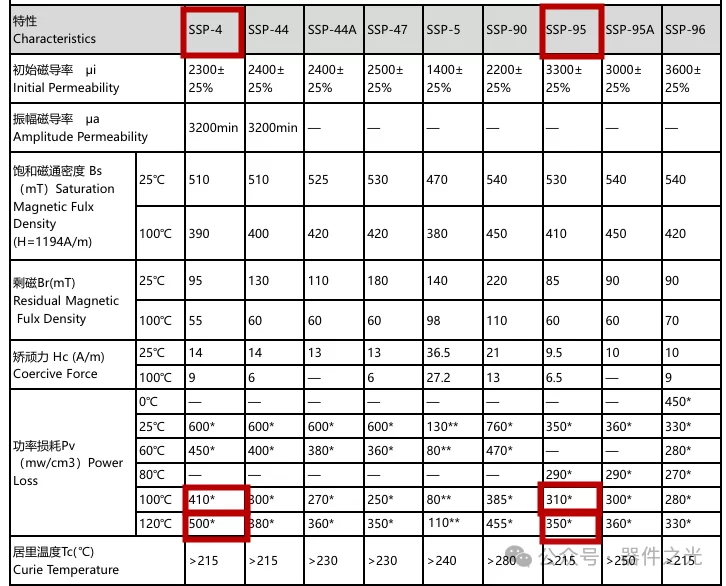
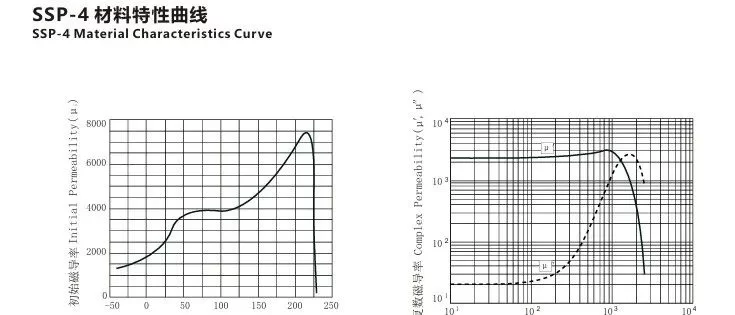
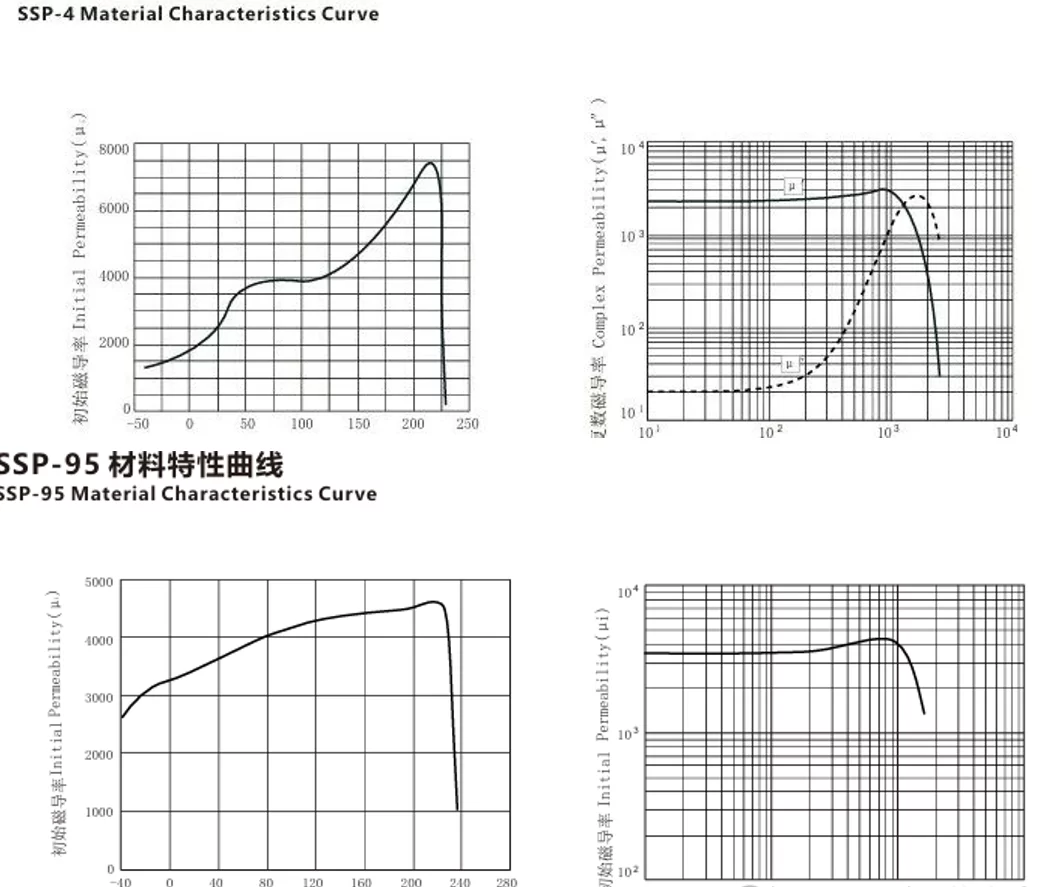
4. 40,95 the two materials have different stability characteristics. In transformer applications, we often need to consider the effects of temperature and frequency on the magnetic core. Based on the material characteristic curves, it is not difficult to see that the temperature and frequency stability of SSP-95 material is superior to that of SSP-4 material.
5.40 and 95 materials have different prices. In general, the price of SSP-95 material is higher than that of SSP-4 material cores. However, in the actual procurement process, the most significant factor affecting the price is not the material but the procurement volume.
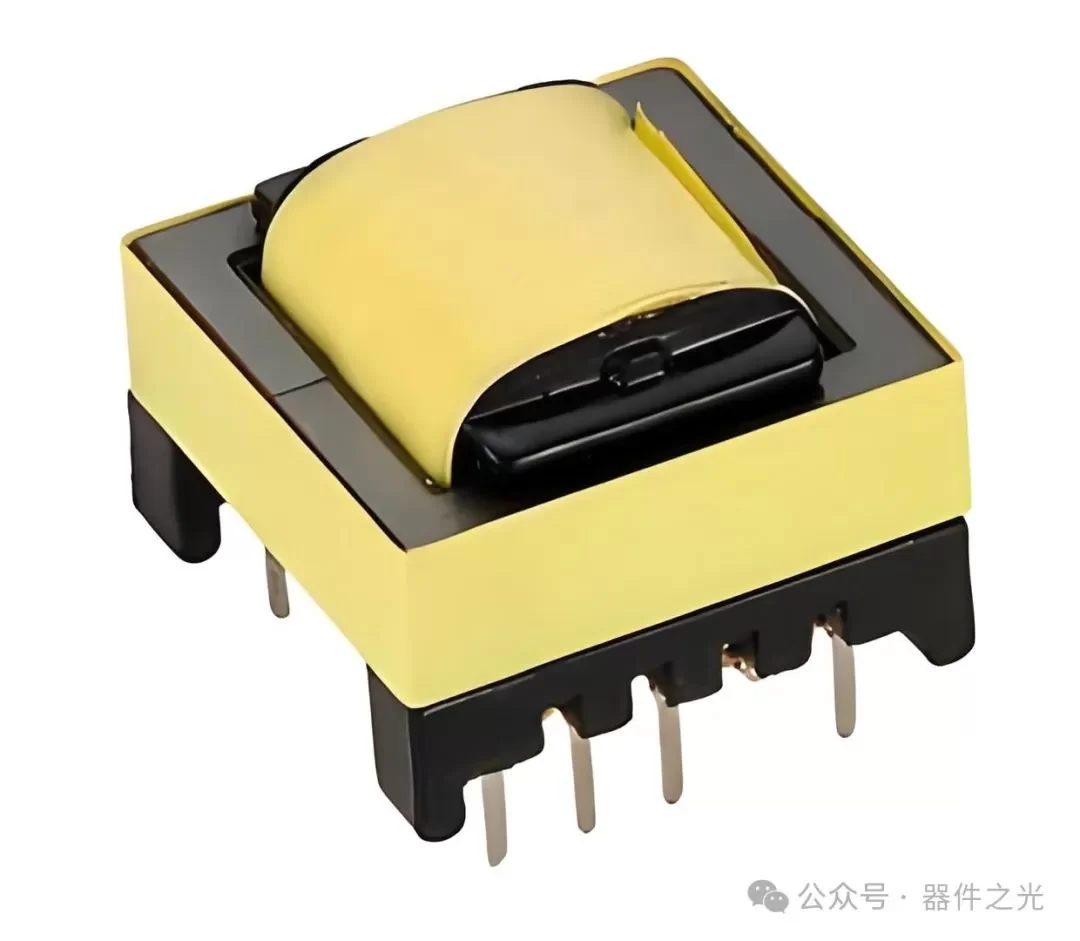
If the magnetic core is highly versatile and the purchase volume is large enough, the price of SSP-95 material may only be about 5% higher than that of SSP-4 material. However, if the magnetic core is not versatile, the price difference may exceed 30%.
This is the last article