
Hit enter to search or ESC to close
6 August 2025
In actual operation, the frequency of a high-frequency transformer is determined by a combination of factors and can be categorized into several aspects:
1. Circuit topology structure Flyback topology: The transformer serves both energy storage and voltage conversion functions, with a common operating frequency range of 40–100 kHz. When the frequency is below 40 kHz, the core volume becomes excessively large, leading to an oversized power supply; When the frequency exceeds 100 kHz, voltage spikes caused by leakage inductance may damage the switching transistors. Forward topology: The common frequency range is 60–150 kHz, but it is necessary to balance core losses and switching losses. Push-pull/half-bridge/full-bridge topology: Symmetrical switching drives bidirectional magnetization of the core, resulting in higher efficiency and support for higher frequencies ranging from hundreds of kHz to MHz levels. However, this requires more complex control design and heat dissipation.
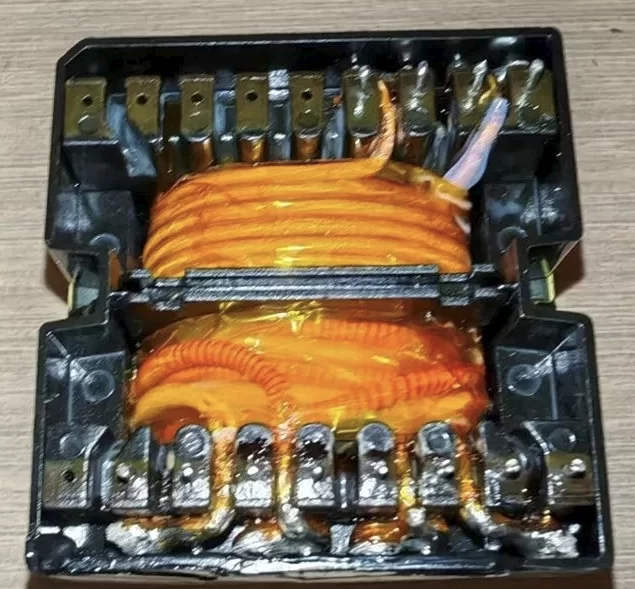
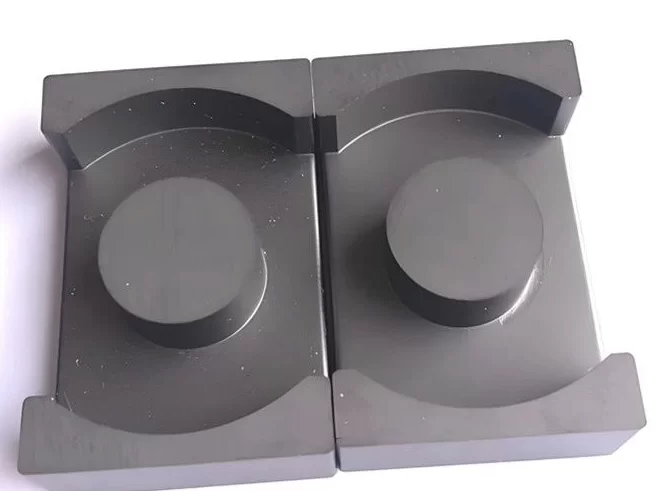
2. Core Material Characteristics Core losses, including hysteresis losses and eddy current losses, increase with frequency within a certain range. Therefore, different core materials should be used for different frequency ranges to ensure relatively lower core losses. For example, manganese-zinc ferrite is suitable for frequencies between 10 and 300 kHz, while nickel-zinc ferrite is suitable for frequencies above 1 MHz. Additionally, as frequency increases, the maximum magnetic flux density must be reduced to prevent core saturation. For instance, the magnetic flux density of DMR40 is 0.38 T, and when designing for a 100 kHz frequency, the value is typically set around 0.2 T.
3. Switching speed of power devices MOSFETs are unipolar devices with on/off times in the nanosecond range, theoretically capable of operating at frequencies up to MHz, though the actual maximum operating frequency is typically several hundred kHz. IGBTs are bipolar devices with longer off times, typically operating at frequencies up to 40–50 kHz.
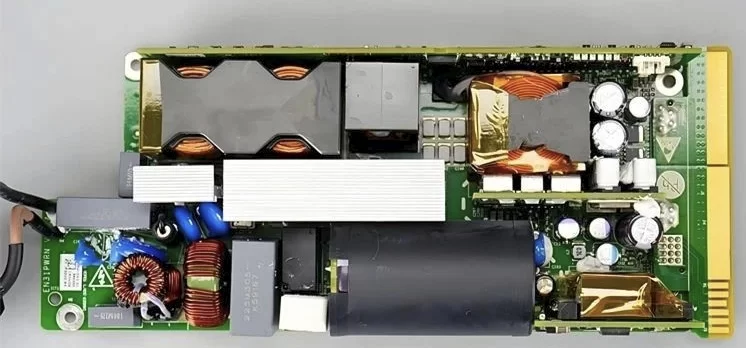
4. Efficiency and Heat Dissipation As frequency increases, switching losses and drive losses also increase, leading to reduced overall efficiency and increased heat generation. To ensure the product operates within normal temperature limits, additional measures are required to address heat dissipation.
5. Cost At high frequencies, increased switching losses and the need for additional heat dissipation measures result in higher costs. Additionally, capacitors and inductors often experience performance degradation at high frequencies, necessitating the selection of components compatible with higher frequencies, which also increases costs. In practical design, costs are often limited, which typically determines the upper limit of the operating frequency.
6. Chip Characteristics PWM control chips typically have frequency upper limits to respond to dynamic load adjustments. This also determines that the switching frequency of the transformer is within a certain range.