
Hit enter to search or ESC to close
2 February 2026
The 3-way crossover network is a crucial component in high-fidelity audio systems, responsible for dividing the audio signal into three frequency ranges – high, mid, and low – and directing each range to the appropriate speaker driver (tweeter, midrange, and woofer). This process ensures optimal performance from each driver, resulting in clearer, more accurate sound reproduction. Understanding the principles behind these networks is vital for audiophiles, sound engineers, and anyone involved in speaker design and construction. We'll explore the benefits, components, design considerations and applications of 3-way crossover networks, helping you optimize your audio experience.
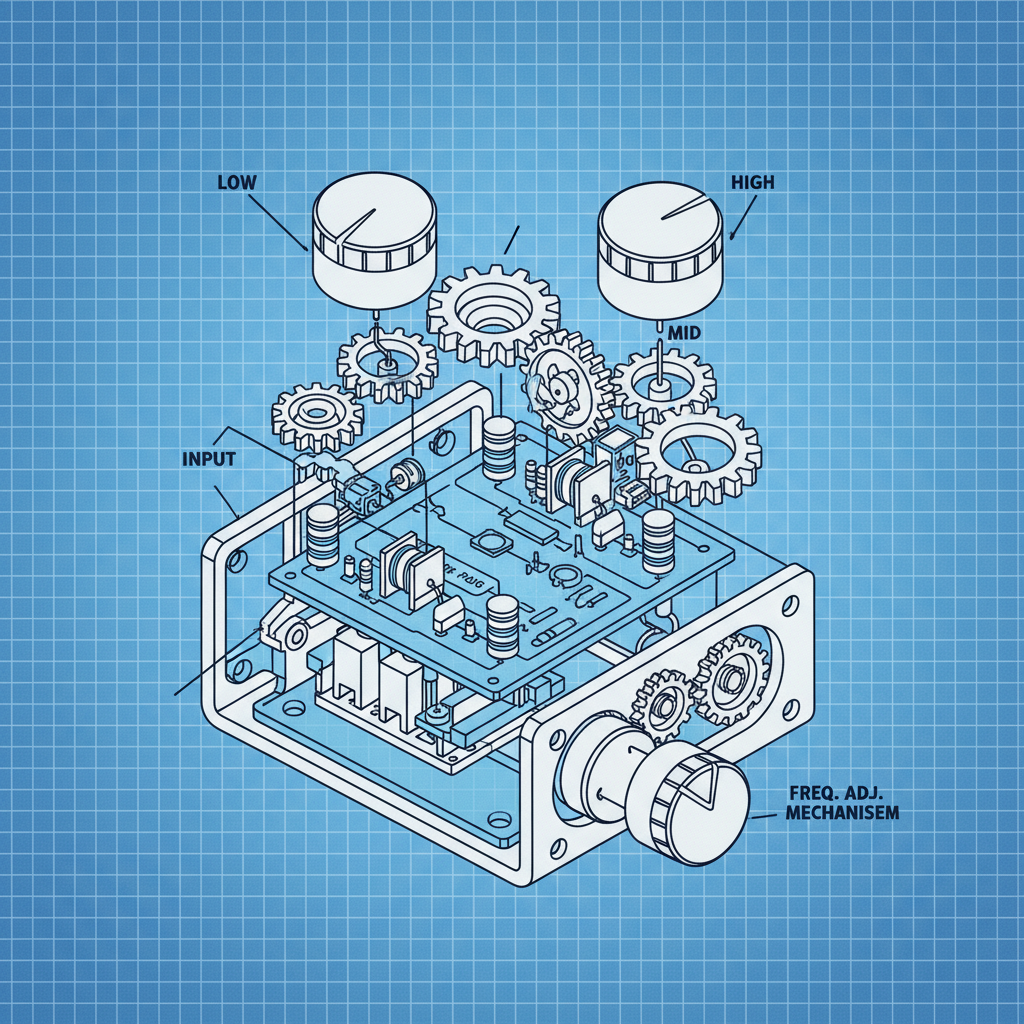
A 3-way crossover network, as the name suggests, splits the full-range audio signal into three distinct frequency bands. These bands are then sent to speakers specifically designed to handle those ranges. The tweeter reproduces high frequencies, the midrange driver handles middle frequencies, and the woofer is responsible for the low frequencies. This division of labor allows each driver to operate within its optimal range, minimizing distortion and maximizing efficiency. The design of a crossover network involves careful selection of components – capacitors, inductors, and resistors – to achieve precise frequency division points and desired filter slopes. A well-designed crossover network improves the overall clarity, imaging, and dynamic range of the audio system.
Key Benefits: Improved frequency response, reduced distortion, enhanced clarity, and optimized speaker performance.
The core components of a 3-way crossover network are capacitors, inductors (coils), and resistors. Capacitors block low frequencies and allow high frequencies to pass. Inductors block high frequencies and allow low frequencies to pass. Resistors are used to adjust the signal level and shape the filter response. The specific values of these components determine the crossover frequencies – the points at which the signal is divided – and the slope of the filters, which controls how quickly the signal is attenuated outside of the desired frequency range. Different types of capacitors and inductors (e.g., air-core vs. iron-core) also affect the network's performance. The quality of these components is paramount for achieving accurate and transparent sound.
Component Functions:
• Capacitors: Block low frequencies.
• Inductors: Block high frequencies.
• Resistors: Adjust signal level and shape filter response.
Selecting appropriate crossover frequencies is critical for optimal performance. Common crossover points for a 3-way system are typically between 300Hz-500Hz (low/mid) and 2kHz-3kHz (mid/high). The exact frequencies depend on the specific drivers being used and their individual frequency response characteristics. Careful consideration must be given to the drivers' sensitivity and dispersion patterns at the crossover points to ensure a smooth transition between frequency bands. Incorrectly chosen crossover frequencies can lead to frequency response anomalies, such as dips or peaks, and poor imaging. Modeling software and measurement tools can aid in determining the optimal crossover frequencies for a specific speaker system.
The slope of the crossover filters – measured in dB per octave – determines how quickly frequencies are attenuated outside the desired range. Common filter slopes include 6dB/octave, 12dB/octave, and 24dB/octave. Steeper slopes provide better isolation between drivers but can introduce phase shifts. Maintaining proper phase alignment between the drivers is crucial for accurate imaging and a cohesive soundstage. Phase correction circuits may be incorporated into the crossover network to address phase anomalies. Designing a 3-way crossover requires careful balancing of filter slopes, crossover frequencies, and phase response to achieve optimal performance. XCDmagnetic provides high-quality components suitable for demanding crossover designs.
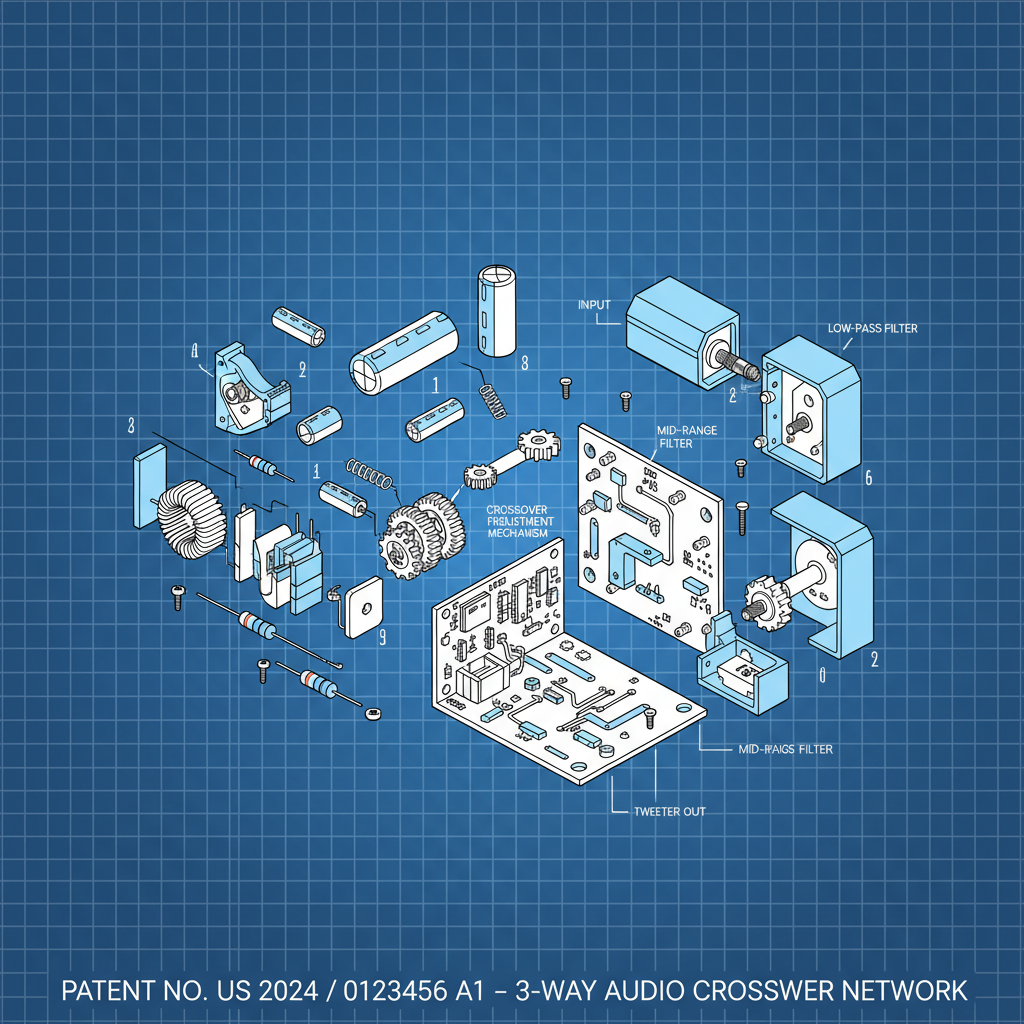
3-way crossover networks are widely used in a variety of audio applications, including high-end home audio systems, professional studio monitors, and live sound reinforcement. They are particularly beneficial in systems that require high fidelity and accurate sound reproduction. The separation of frequency ranges allows for more precise control over the soundstage and imaging. They are commonly found in floor-standing speakers and larger bookshelf speakers where the demands on each driver are more significant. The improved clarity and dynamic range make them ideal for critical listening and professional audio work.
The 3-way crossover network is a powerful tool for improving the performance of your audio system. By carefully selecting components and designing the network correctly, you can achieve clearer, more accurate sound reproduction with enhanced clarity and imaging. Investing in quality crossover components from a reputable source is key to realizing the full potential of your speakers.
A passive crossover network uses passive components (capacitors, inductors, resistors) and is placed after the amplifier. It's simpler to implement but can be less efficient due to power loss in the components. An active crossover network, on the other hand, uses active components (op-amps) and is placed before the amplifier, requiring a separate amplifier channel for each frequency band. Active crossovers offer more precise control over frequency response and phase but are more complex and require more amplification channels. Active networks are generally more expensive and complex to setup than passive networks.
Calculating crossover frequencies accurately requires knowledge of your driver's Thiele/Small parameters. Specialized software, like XSim or VituixCAD, can assist in crossover design by simulating the frequency response of your speakers and optimizing the crossover network. Alternatively, you can use online crossover calculators, but these provide less precise results. The best approach is to measure your drivers’ frequency response and use this data in a simulation program to design the crossover.
Filter slope refers to the rate at which the signal is attenuated outside the desired frequency range. It's measured in dB per octave. A higher dB/octave slope means a steeper attenuation, providing better isolation between drivers. However, steeper slopes can introduce phase shifts. Common slopes are 6dB/octave, 12dB/octave, and 24dB/octave. The appropriate slope depends on the specific application and the drivers being used.
A 3-way system offers several benefits over a 2-way system. By adding a dedicated midrange driver, the load on the woofer and tweeter is reduced, allowing each driver to perform more efficiently within its optimal range. This results in greater clarity, improved dynamic range, and more accurate imaging. The dedicated midrange driver can reproduce vocals and instruments with greater detail and accuracy.