
Hit enter to search or ESC to close
7 April 2026
A home audio subwoofer crossover is a crucial component in any high-quality sound system. It acts as a filter, directing specific frequencies to the appropriate speakers – ensuring your subwoofer handles the low-frequency bass, while other speakers manage mid and high ranges. This optimizes sound clarity and prevents distortion. Without a properly designed crossover, your subwoofer might struggle with frequencies it’s not designed for, or you may experience unwanted sounds. Investing in the right crossover can dramatically improve your listening experience.
At its core, a crossover network separates the audio signal into different frequency bands. Low frequencies are sent to the subwoofer, mid frequencies to midrange speakers, and high frequencies to tweeters. This division of labor is essential because different speaker drivers are designed to reproduce sound optimally within specific ranges. A crossover prevents the subwoofer from trying to reproduce high-pitched sounds it isn’t capable of handling, and vice-versa. There are two main types of crossovers: passive and active. Passive crossovers are more common in consumer systems and don’t require external power. Active crossovers, used more often in professional settings, require power and offer more precise control.
Key Benefit: Proper frequency distribution prevents distortion and enhances the overall clarity and accuracy of your audio system.
The choice between a passive and active subwoofer crossover depends on your setup and desired level of control. Passive crossovers are simpler to implement and more affordable, but offer limited adjustment options. Active crossovers, however, allow for fine-tuning of crossover points, slopes, and gain, resulting in a more precise and tailored sound. Active crossovers require a separate amplifier channel for each frequency band, adding complexity and cost to your system. Consider your technical expertise and budget when making this decision.
Passive vs. Active Crossovers at a Glance:
• Passive: Simple, affordable, no external power required.
• Active: Precise control, requires amplification, more complex setup.
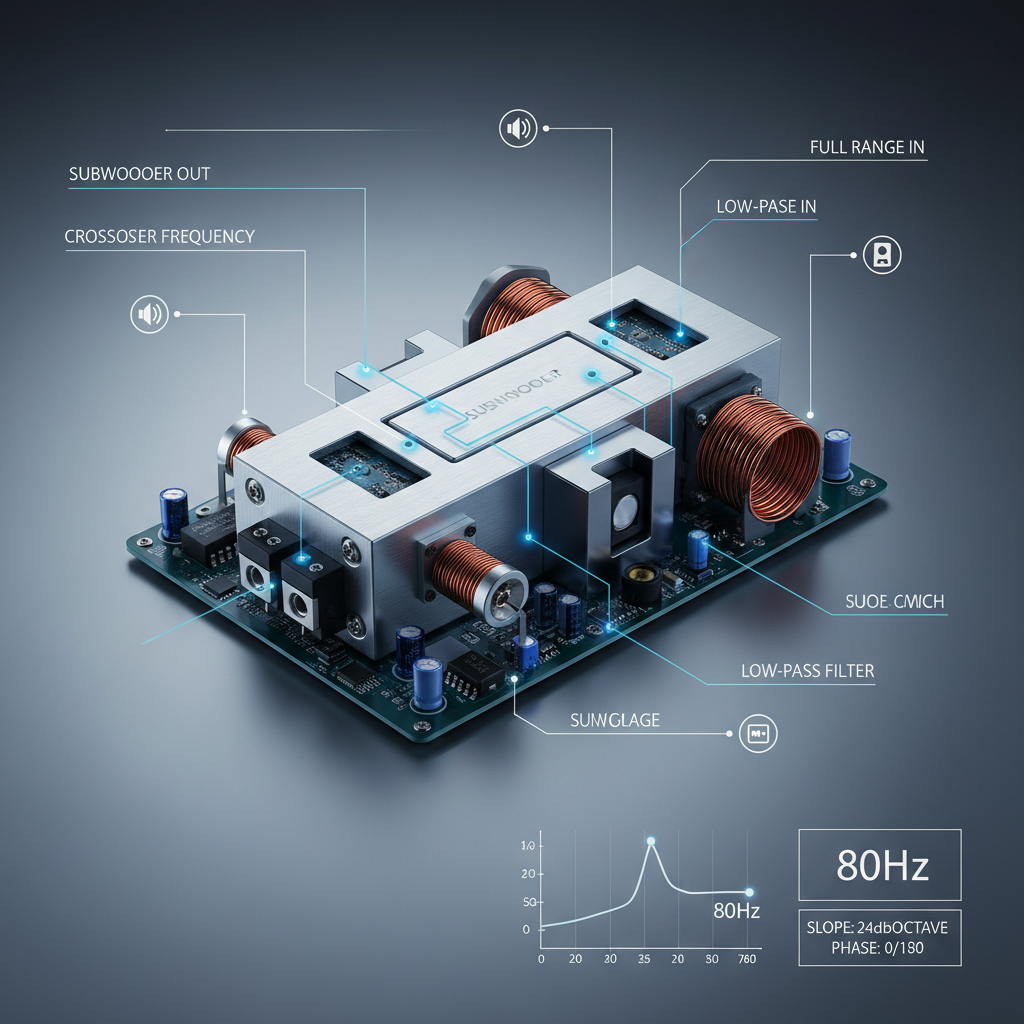
When selecting a subwoofer crossover, several specifications are critical. The crossover frequency determines the point at which frequencies are divided between the subwoofer and other speakers. The crossover slope (measured in dB/octave) dictates how rapidly frequencies are attenuated above or below the crossover point. A steeper slope provides a more defined separation. Finally, the impedance of the crossover must match the impedance of your speakers and amplifier for optimal performance. Matching these specifications correctly will ensure a smooth and balanced audio experience.
At XCD Magnetic, we specialize in providing the highest-quality magnetic components essential for building superior home audio subwoofer crossovers. Our ferrite cores, known for their excellent permeability and low losses, are vital for inductor construction within the crossover network. These inductors play a crucial role in shaping the frequency response and ensuring accurate sound reproduction. We also provide custom magnetic solutions to meet specific design requirements.
Selecting and implementing the correct home audio subwoofer crossover is fundamental to achieving optimal audio performance. Careful consideration of crossover frequency, slope, and impedance, along with the use of high-quality components from suppliers like XCD Magnetic, will result in a clean, powerful, and immersive listening experience. Don't underestimate the impact this component has on the overall sound quality of your system!
The home audio subwoofer crossover is a vital, often overlooked, component in a high-fidelity sound system. By understanding its function and carefully selecting quality parts – like those offered by XCD Magnetic – you can unlock the full potential of your audio investment. A well-chosen crossover ensures accurate sound reproduction, prevents distortion, and ultimately delivers a superior listening experience.
The ideal crossover frequency depends on your speakers and listening preferences. Generally, a range between 80Hz and 120Hz is a good starting point. Lower frequencies (e.g., 80Hz) are suitable for smaller satellite speakers that struggle with lower bass. Higher frequencies (e.g., 120Hz) work well with larger speakers that can handle more bass. Experimentation is key – listen to different frequencies and choose the one that provides the smoothest transition and most natural sound. Consider your room acoustics as well, as room size and shape can influence the optimal crossover point.
The crossover slope determines how quickly frequencies are attenuated. A steeper slope (e.g., 24dB/octave) provides a more abrupt cutoff, minimizing overlap between the subwoofer and other speakers and potentially reducing distortion. However, a very steep slope can introduce phase shifts, which can negatively impact sound quality. A gentler slope (e.g., 12dB/octave) offers a smoother transition but may allow for some frequency overlap. The optimal slope depends on your speakers and listening environment.
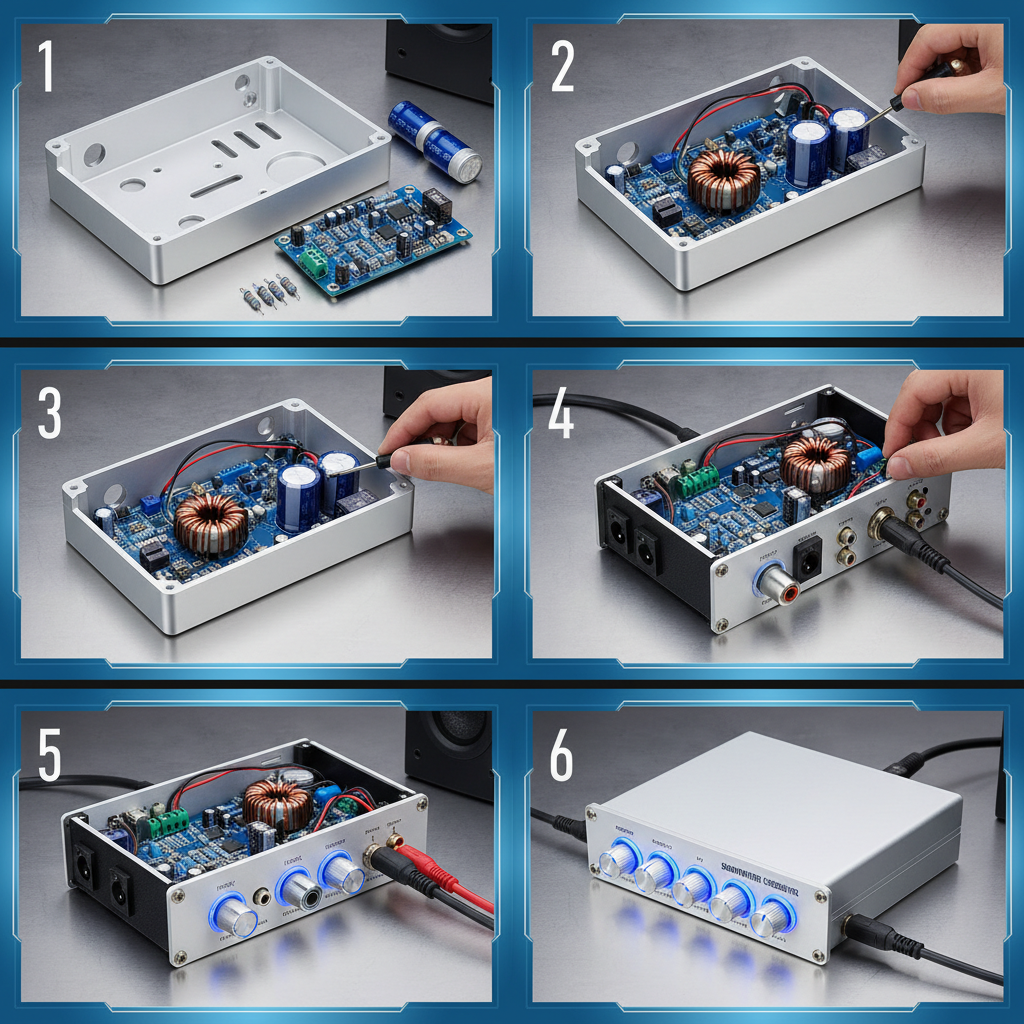
Yes, you can build your own subwoofer crossover, but it requires a good understanding of electronics and circuit design. You'll need to source the necessary components – capacitors, inductors (like those available from XCD Magnetic), and resistors – and assemble them according to a specific schematic. Building your own crossover allows for customization but also carries the risk of errors that can damage your speakers. Pre-built crossovers are a safer and more convenient option for those without extensive electronics experience.