Exploring the World of Crossover Car Sound
If you’ve ever dabbled in car audio systems, you know that the magic often lies in the subtle engineering details. One of those details—often overlooked by casual listeners but absolutely crucial for audiophiles and professionals alike—is the crossover car sound.
Frankly, after spending years around industrial equipment—where precision and reliability drive decisions—I find the way these crossovers shape the auditory experience quite fascinating.
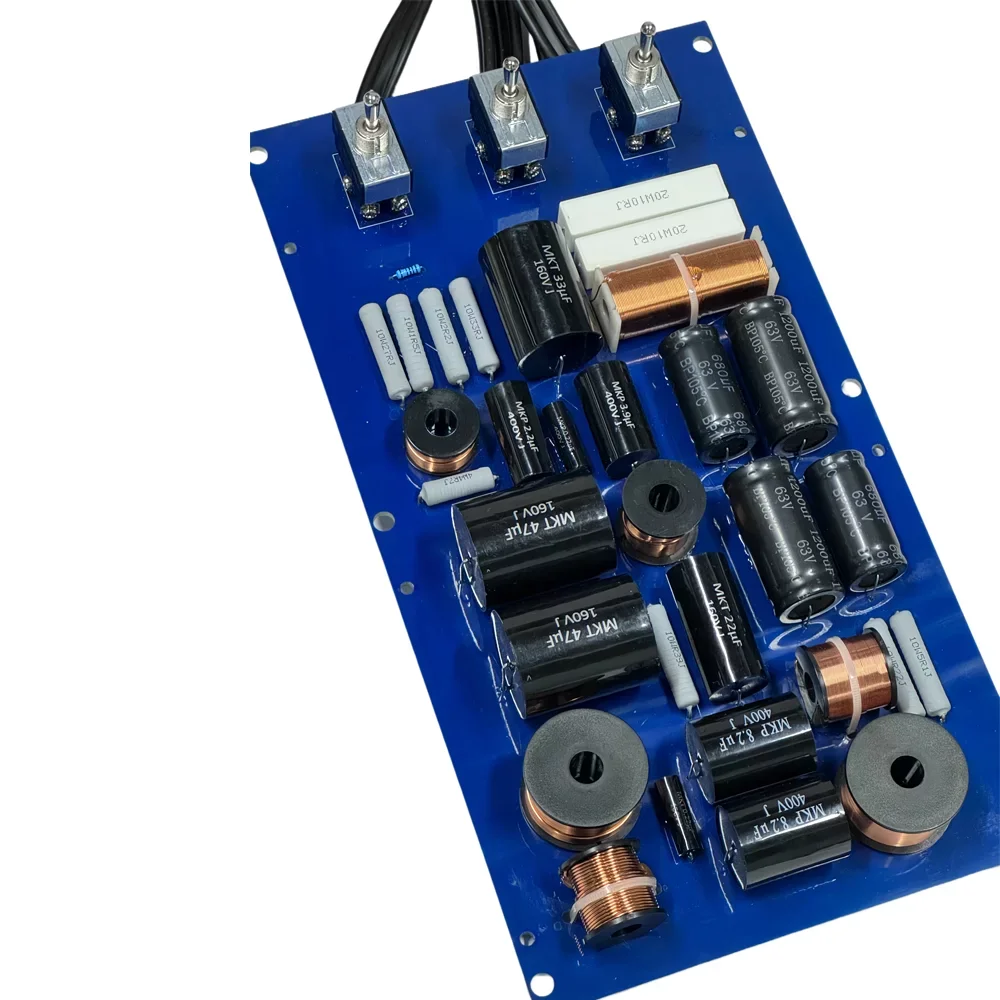
At its core, a crossover is a frequency-splitting device. It divides an audio signal into different frequency bands that can be sent to specific speakers, like tweeters, mid-range drivers, or woofers. This division helps each speaker perform optimally within its designed frequency range, improving the overall clarity and balance of the sound inside your car.
Oddly enough, despite the simplicity of the concept, the design and materials used in these components can vary widely, impacting both performance and longevity.
Industry experts I’ve worked with often emphasize the importance of quality inductors and capacitors in crafting effective crossovers. Cost-cutting here might save you a few bucks initially, but over time, distortion creeps in, and the soundstage collapses subtly but noticeably. I remember one project with a client who upgraded to a high-end crossover, and the difference was like night and day—crisp highs, rich mids, and a bass response that didn’t overwhelm but supported the whole mix.
| Specification |
Details |
| Type |
Passive 2-way / 3-way |
| Frequency Range |
80 Hz – 20 kHz (varies by model) |
| Power Handling |
Up to 200 Watts RMS |
| Component Materials |
Air-core inductors, polypropylene capacitors |
| Dimensions (L×W×H) |
120 × 80 × 30 mm |
| Weight |
150 grams |
What’s interesting to note is how crossover designs scale and customize according to user needs. For example, tuning a crossover for a factory system is hugely different from high-end aftermarket installations. I once consulted on a project where an aftermarket company wanted to create an adaptable crossover specifically designed to work with factory head units—developers were keen to preserve the original audio character while enhancing fidelity. It’s a fine balancing act, kind of like walking a tightrope while carrying speakers.
When choosing a vendor for crossovers, reliability and support matter just as much as specifications. Here’s a brief comparison based on my experience and some market research:
| Vendor |
Build Quality |
Customization Options |
Customer Support |
Price Range |
| XCD Magnetic |
Excellent, industrial-grade components |
Multiple configurations available |
Responsive, with technical advice |
Moderate |
| SoundCraft |
Good but uses standard components |
Limited |
Average |
Budget-friendly |
| ProSound Tech |
Premium components, well-built |
Highly customizable |
Excellent, but pricier |
High-end |
The lesson I’ve learned through years of working hands-on with automotive audio equipment is this: a good crossover isn’t just another part in the chain—it’s the traffic controller that makes sure your system sounds coherent, clean, and capable of delivering the dynamics you want.
A client I visited recently was thrilled by how an upgraded crossover transformed her daily commute. “It’s like I discovered new music tracks I never realized existed,” she said. That’s the kind of impact that sticks with me.
So, in real terms, investing in quality crossover car sound components is more than technical installation—it’s about better sound experiences that stand the test of time.
References:
1. Automotive Audio Engineering, 4th Edition – Industry Standard Guide
2. XCD Magnetic Product Documentation, accessed June 2024
3. Expert interviews on car audio crossover design, 2023