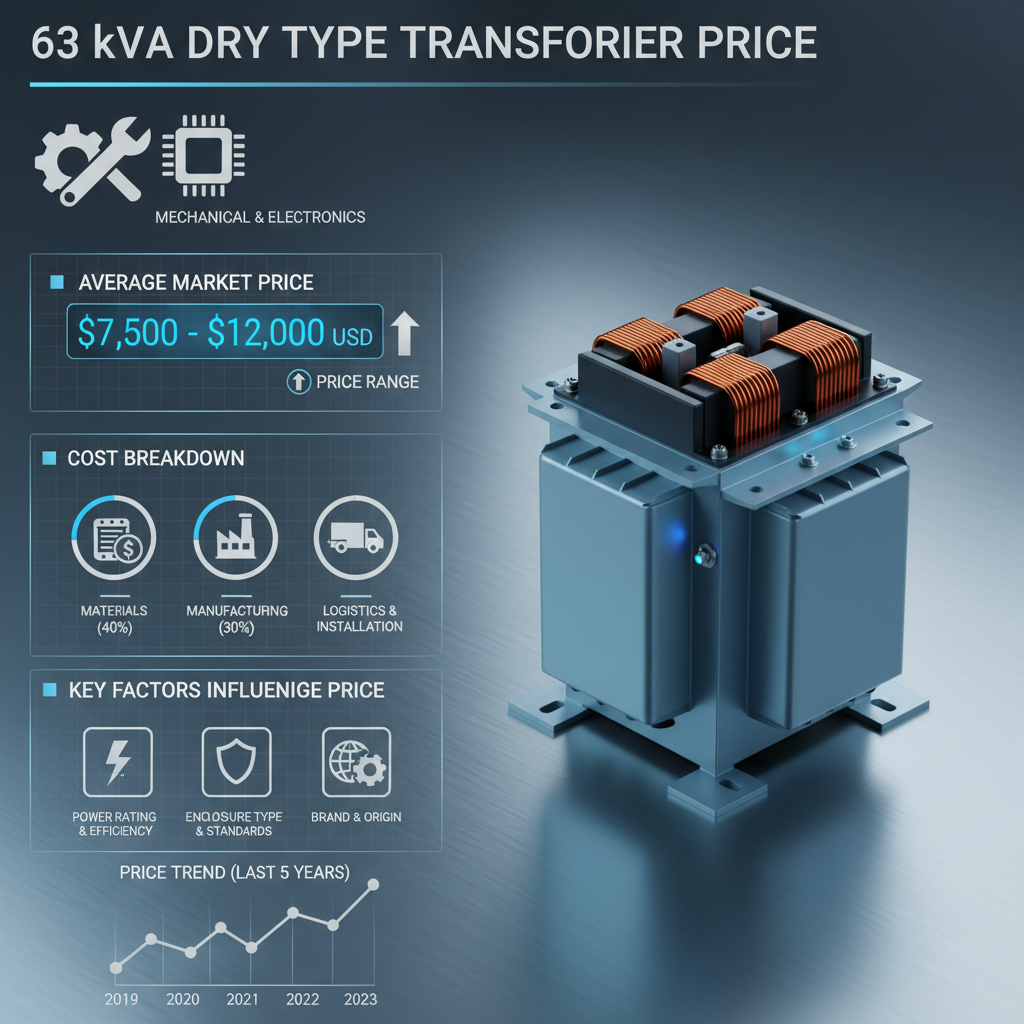
Navigating the complexities of electrical infrastructure often leads procurement managers and engineers to a critical question: what is the actual 63 kva dry type transformer price in today's volatile market? As industries shift toward safer, more sustainable power distribution, dry-type transformers have become the gold standard for indoor installations where oil-filled alternatives pose fire risks. Understanding the cost structure is not just about the bottom line; it is about balancing initial capital expenditure with long-term operational reliability.
The global demand for medium-capacity power solutions is surging, driven by the expansion of data centers, commercial complexes, and smart manufacturing plants. When analyzing the 63 kva dry type transformer price, one must consider the convergence of raw material costs—such as high-grade silicon steel and copper—and the technological advancements in cast resin insulation. These factors collectively influence how much a business invests today to ensure energy stability for the next two decades.
Ultimately, securing a competitive 63 kva dry type transformer price requires a deep dive into technical specifications and vendor capabilities. Whether you are upgrading an existing facility or designing a new power grid, the cost is inextricably linked to the transformer's efficiency rating, environmental endurance, and compliance with international standards like IEC or IEEE. This guide aims to demystify the pricing variables and provide a comprehensive framework for making an informed investment.
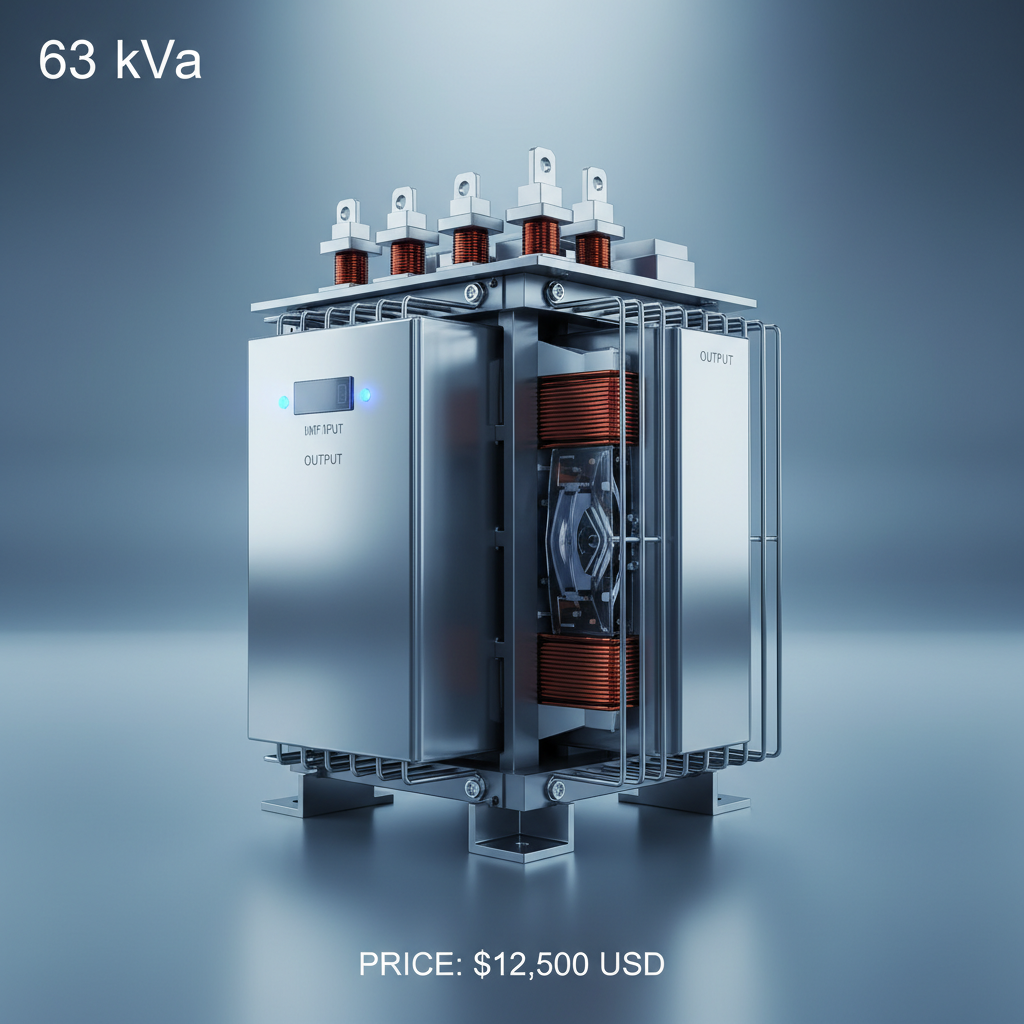
Global Market Dynamics of 63 kva Dry Type Transformer Price
The global fluctuations in the 63 kva dry type transformer price are heavily dictated by the commodities market. According to industrial reports and ISO quality trends, the cost of cold-rolled grain-oriented (CRGO) steel—the heart of the transformer core—can cause price swings of 10-15% within a single quarter. As emerging economies in Southeast Asia and Africa expand their urban infrastructure, the competition for these raw materials intensifies, directly impacting the procurement costs for end-users.
Furthermore, international shipping and tariffs play a silent but significant role in the final landed 63 kva dry type transformer price. Organizations importing these units often face a choice between lower upfront costs from distant manufacturers and the reliability of local suppliers. The challenge lies in mitigating these logistical risks while maintaining a strict budget, necessitating a strategic approach to sourcing that considers total cost of ownership rather than just the sticker price.
Defining the Value Proposition of Dry Type Transformers
In simple terms, the 63 kva dry type transformer price represents the investment in a power conversion device that uses air or solid insulating materials instead of oil. Unlike liquid-filled transformers, these units are designed for environments where safety is paramount, such as hospitals, high-rise buildings, and underground metros. The value here is not just in the electrical conversion, but in the elimination of oil-leakage risks and the reduction of fire hazards.
From a humanitarian and urban planning perspective, the adoption of dry-type technology is a response to the need for safer city living. By reducing the risk of catastrophic oil fires in densely populated areas, the slightly higher 63 kva dry type transformer price compared to oil-immersed versions is viewed as an essential insurance premium for public safety. This shift is aligned with global "Green City" initiatives that prioritize non-toxic materials.
Moreover, these transformers are integral to modern industry's need for low-maintenance infrastructure. The absence of oil means no need for oil sampling, filtration, or complex containment pits, which significantly lowers the operational expenditure (OPEX). When the 63 kva dry type transformer price is analyzed over a 20-year lifecycle, the savings in maintenance often outweigh the initial purchase premium.
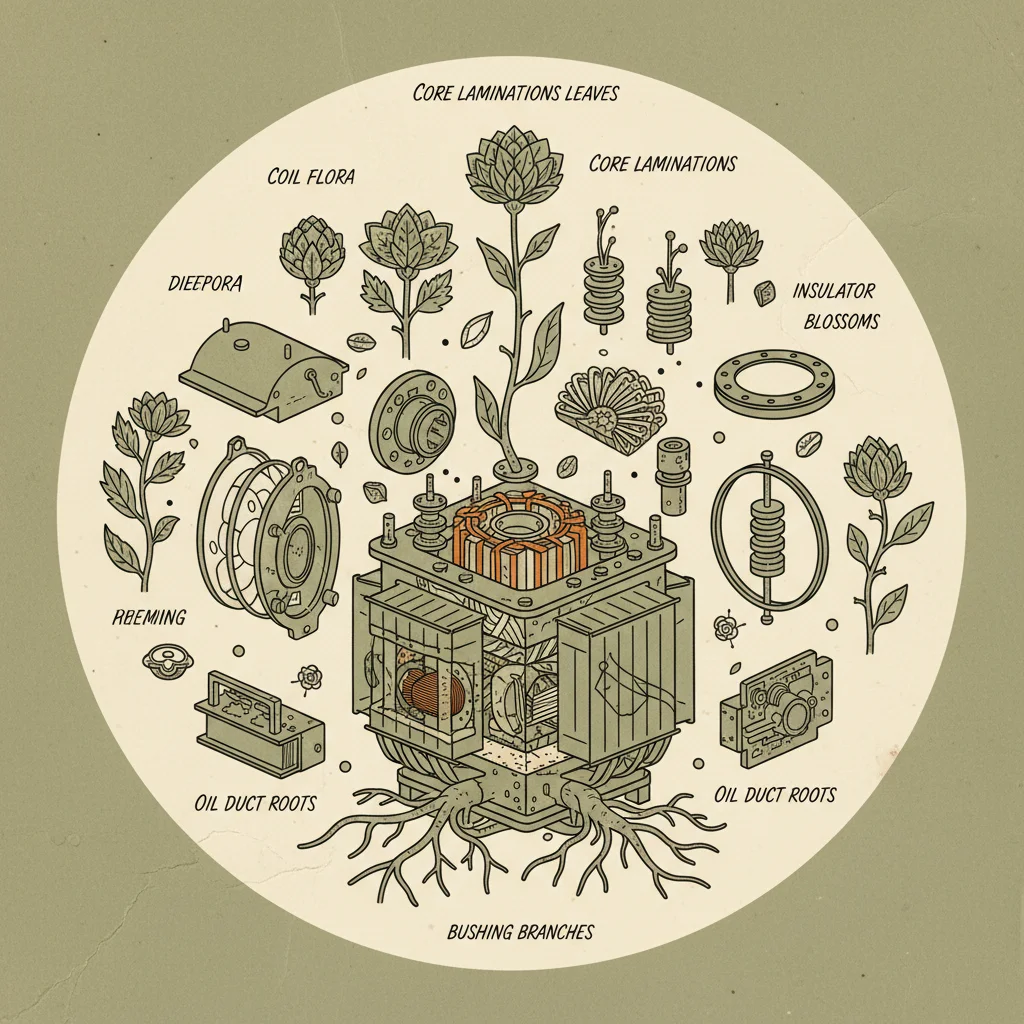
Core Components Affecting the 63 kva Dry Type Transformer Price
One of the primary drivers of the 63 kva dry type transformer price is the quality of the winding material. Copper windings offer superior conductivity and lower losses but come at a significantly higher cost than aluminum alternatives. For high-load industrial applications, the efficiency gains of copper often justify the price increase by reducing energy waste and heat generation.
The insulation system is another critical factor; cast resin technology, which encapsulates the windings in a vacuum-pressure impregnated epoxy, directly influences the 63 kva dry type transformer price. This process ensures the unit can withstand moisture, dust, and chemical pollutants, making it indispensable for harsh industrial environments where standard insulation would fail.
Finally, the core construction using high-permeability silicon steel determines the "no-load loss" of the unit. Investing in a higher-grade core may increase the 63 kva dry type transformer price initially, but it prevents thousands of dollars in energy leakage over the equipment's lifespan, providing a tangible return on investment for energy-conscious corporations.
Cost-Efficiency and Performance Metrics
When comparing different quotes for a 63 kva dry type transformer price, it is essential to use a standardized performance matrix. Not all transformers are created equal; a cheaper unit may have higher harmonic distortion or a lower temperature class (e.g., Class F vs. Class H), which limits its ability to handle overloads without degrading the insulation.
To truly evaluate the value, engineers look at the "Total Ownership Cost" (TOC). This includes the 63 kva dry type transformer price, installation costs, and the projected energy loss costs over 15 years. A transformer that is 5% more expensive today but 2% more efficient can save a facility tens of thousands of dollars in electricity bills.
Comparison of 63 kva Dry Type Transformer Price Value Factors
Global Industrial Applications and Use Cases
The application of these units is diverse, ranging from high-tech hubs in Singapore to industrial zones in Germany. In data centers, where uptime is critical and the risk of fire is unacceptable, the 63 kva dry type transformer price is considered a secondary concern compared to the reliability of the power supply. These facilities often deploy multiple units in parallel to ensure redundancy.
In remote industrial zones or post-disaster relief operations, the ease of deployment of dry-type transformers is a major advantage. Because they do not require oil containment systems, they can be installed quickly in temporary modular buildings. This agility makes the 63 kva dry type transformer price a strategic investment for NGOs and government agencies who need to restore power in critical areas without long-term site preparation.
Long-Term Financial and Safety Advantages
Investing in a quality unit—even if the initial 63 kva dry type transformer price is higher—yields significant safety dividends. The primary advantage is the elimination of the "fire load" associated with oil. In a commercial basement, this can mean the difference between a minor electrical fault and a total building loss, directly affecting insurance premiums and safety certifications.
From a sustainability angle, dry-type transformers are inherently more eco-friendly. There is no risk of soil or groundwater contamination from oil leaks, which simplifies the decommissioning process at the end of the product's life. This environmental alignment is becoming a requirement for companies striving for ESG (Environmental, Social, and Governance) compliance.
Logistically, the trust established through a transparent 63 kva dry type transformer price and a proven track record of reliability allows facility managers to plan their budgets with precision. The predictability of maintenance—largely consisting of simple cleaning and thermal scanning—removes the volatility associated with oil testing and replacement.
Future Trends in Transformer Pricing and Technology
The future of the 63 kva dry type transformer price will be shaped by the integration of "Smart Grid" technologies. We are seeing the emergence of transformers equipped with IoT sensors that monitor temperature and load in real-time. While these digital additions increase the upfront 63 kva dry type transformer price, they enable predictive maintenance, preventing costly unplanned outages.
Furthermore, advancements in nanomaterials for insulation are expected to reduce the physical size of transformers while maintaining the same capacity. As these materials move from the lab to mass production, the price per kVA may stabilize or even drop, making high-efficiency 63 kva units more accessible to smaller enterprises.
Finally, global policies favoring carbon neutrality are pushing manufacturers toward "ultra-low loss" designs. This shift means that the 63 kva dry type transformer price will increasingly reflect the "carbon footprint" of the manufacturing process and the energy efficiency of the final product, moving the industry toward a more sustainable economic model.
Technical Analysis of 63 kva Dry Type Transformer Price Variants
| Configuration Type |
Relative Price Impact |
Efficiency Rating |
Maintenance Need |
| Copper/Cast Resin |
High |
98.5% |
Very Low |
| Aluminum/Cast Resin |
Medium |
96.2% |
Low |
| Copper/Vacuum Impregnated |
Medium-High |
97.8% |
Moderate |
| Aluminum/Standard Dry |
Low |
95.0% |
Moderate |
| Eco-Design High Efficiency |
Very High |
99.1% |
Very Low |
| Standard Industrial Grade |
Medium |
97.0% |
Low |
FAQS
The price is mainly influenced by the choice of winding material (copper vs. aluminum), the quality of the core silicon steel, and the type of insulation used (such as cast resin). Additionally, market fluctuations in raw metal prices and the specific efficiency standards (e.g., Tier 1 vs. Tier 2) required by the client can significantly shift the final cost.
Generally, the initial 63 kva dry type transformer price is higher than that of an equivalent oil-filled unit. However, this is offset by the absence of oil containment requirements, lower fire-suppression costs, and significantly reduced maintenance expenses over the unit's lifespan, leading to a lower total cost of ownership.
Higher efficiency ratings require higher-grade materials, such as thinner, high-permeability steel laminations and higher purity copper. This increases the upfront purchase price but reduces energy losses (heat), which saves the operator money on electricity bills every month, typically paying back the difference within a few years.
Yes, opting for aluminum windings will lower the 63 kva dry type transformer price significantly. Aluminum is cheaper and lighter than copper. However, it has higher electrical resistance, which can lead to slightly lower efficiency and higher heat generation, so it is best suited for applications where extreme efficiency is not the primary goal.
A well-manufactured 63 kva dry type transformer typically lasts between 20 to 30 years. The longevity is heavily dependent on the quality of the resin insulation and the operating environment. Regular cleaning of dust from the cooling vents is the most effective way to ensure the unit reaches its maximum expected lifespan.
To get an accurate price, provide the manufacturer with specific details: primary and secondary voltage, winding material preference (copper/aluminum), enclosure rating (IP grade), and the desired temperature class. This prevents "ballpark" quotes and ensures you are comparing equivalent technical specifications across different vendors.
Conclusion
Evaluating the 63 kva dry type transformer price is a multifaceted process that extends far beyond the initial purchase quote. By analyzing the impact of raw material quality, insulation technology, and energy efficiency, it becomes clear that the most "cost-effective" solution is rarely the cheapest one. The integration of safety, environmental sustainability, and operational reliability makes the dry-type transformer an indispensable asset for modern electrical infrastructure.
As we move toward a future of smart grids and carbon neutrality, the value of high-efficiency power distribution will only increase. We recommend that procurement officers prioritize total lifecycle costs and safety certifications over short-term savings. For those seeking a balance of performance and competitive pricing, visiting a trusted manufacturer is the first step toward energy security. Visit our website: www.xcdmagnetic.com