
Hit enter to search or ESC to close
26 March 2026
In the realm of audio engineering, achieving optimal sound quality often requires meticulous control over the frequency spectrum. A high pass filter subwoofer plays a vital role in this process, specifically by removing unwanted low-frequency noise and enhancing the clarity of the overall audio experience. This article will delve into the function, benefits, applications, and selection criteria for these crucial components, providing a comprehensive guide for audiophiles and professionals alike. Understanding the nuances of a high pass filter can greatly improve your subwoofer’s performance and system’s overall audio fidelity.
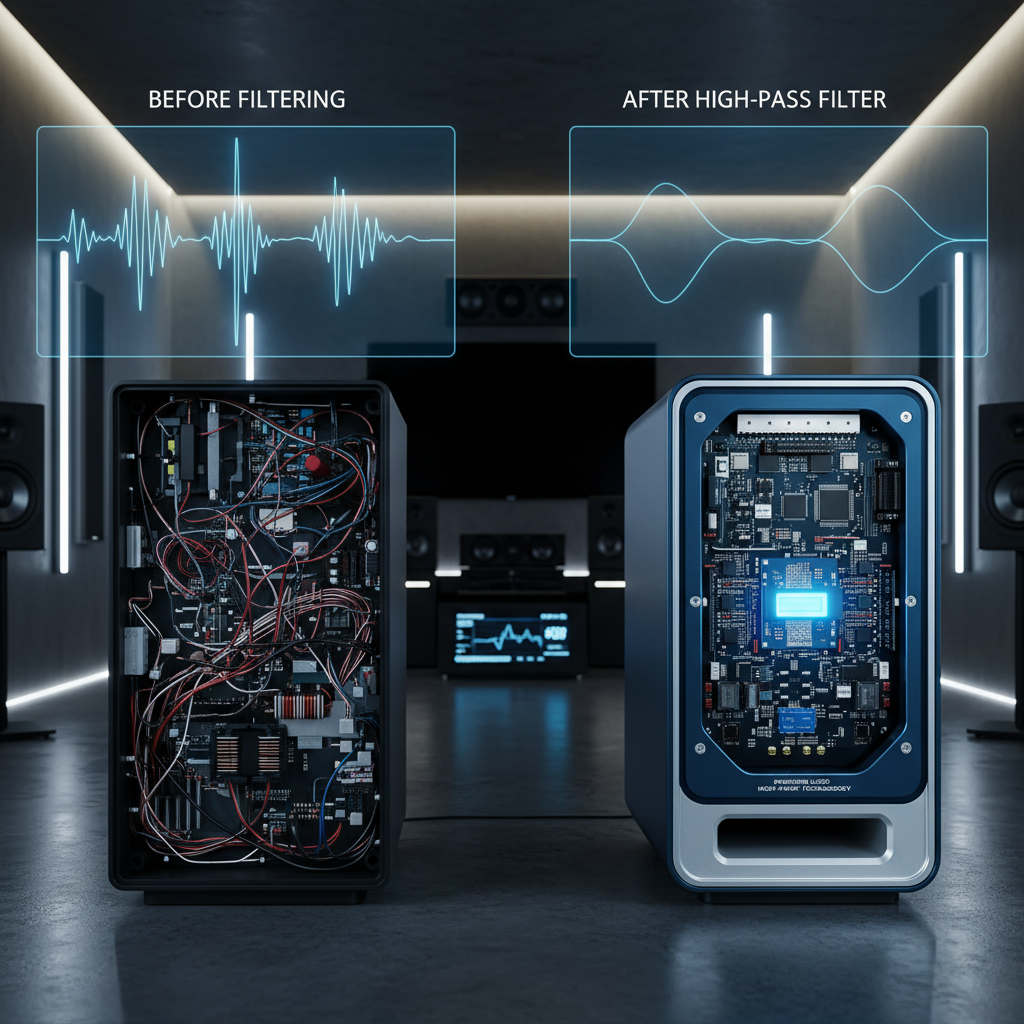
A high pass filter subwoofer, also known as a low-cut filter, is an electronic circuit designed to attenuate frequencies below a specific cutoff point. When integrated into a subwoofer system, it allows only frequencies above that point to pass through to the subwoofer driver. This is crucial for several reasons. Firstly, it prevents the subwoofer from attempting to reproduce frequencies that are outside its optimal range, which can lead to distortion and inefficiency. Secondly, it safeguards the subwoofer driver from potential damage caused by attempting to handle excessive low-frequency signals. Finally, it ensures that the subwoofer focuses on delivering the impactful bass frequencies it’s designed for, creating a cleaner and more defined sonic experience. XCD Magnetic specializes in providing components that enhance these critical audio functions.
Key Takeaway: A high pass filter subwoofer allows frequencies above a set point to pass through, protecting the driver and improving sound clarity.
Implementing a high pass filter on your subwoofer offers several significant benefits. It significantly reduces distortion by preventing the driver from attempting to reproduce ultra-low frequencies that it’s not capable of handling accurately. This, in turn, improves the overall clarity and fidelity of the bass response. Furthermore, the filter protects the subwoofer driver from over-excursion, which can lead to mechanical damage and shorten its lifespan. Properly configured, a high pass filter ensures that the subwoofer delivers clean, powerful, and accurate bass without straining its components. Finally, it creates a better blend between the subwoofer and the other speakers in the system, resulting in a more cohesive and immersive soundstage.
Key Advantages:
• Reduced distortion and improved clarity
• Protection against driver damage
• Enhanced subwoofer lifespan
• Improved system integration and soundstage
Choosing the correct cutoff frequency for your high pass filter is crucial for optimal performance. The ideal setting depends on several factors, including the size and capabilities of your subwoofer driver, the characteristics of your main speakers, and the acoustics of your listening room. A general guideline is to start around 30-40Hz and gradually increase the frequency until you hear a noticeable reduction in bass clarity or output. A good approach is to use test tones and listen critically for any signs of distortion or strain on the subwoofer driver. It's essential to find a balance between protecting the subwoofer and preserving the full range of bass frequencies you desire.
High pass filters can be implemented in several ways. The most common methods include passive filters, which utilize capacitors and resistors, and active filters, which incorporate operational amplifiers for greater precision and control. Passive filters are simpler and less expensive but offer less flexibility in adjusting the cutoff frequency. Active filters provide greater control and can be tailored to specific subwoofer and speaker configurations. Many modern AV receivers and processors include built-in high pass filter functionality, allowing for easy adjustment of the cutoff frequency through the user interface. XCD Magnetic offers components suitable for both passive and active filter designs.
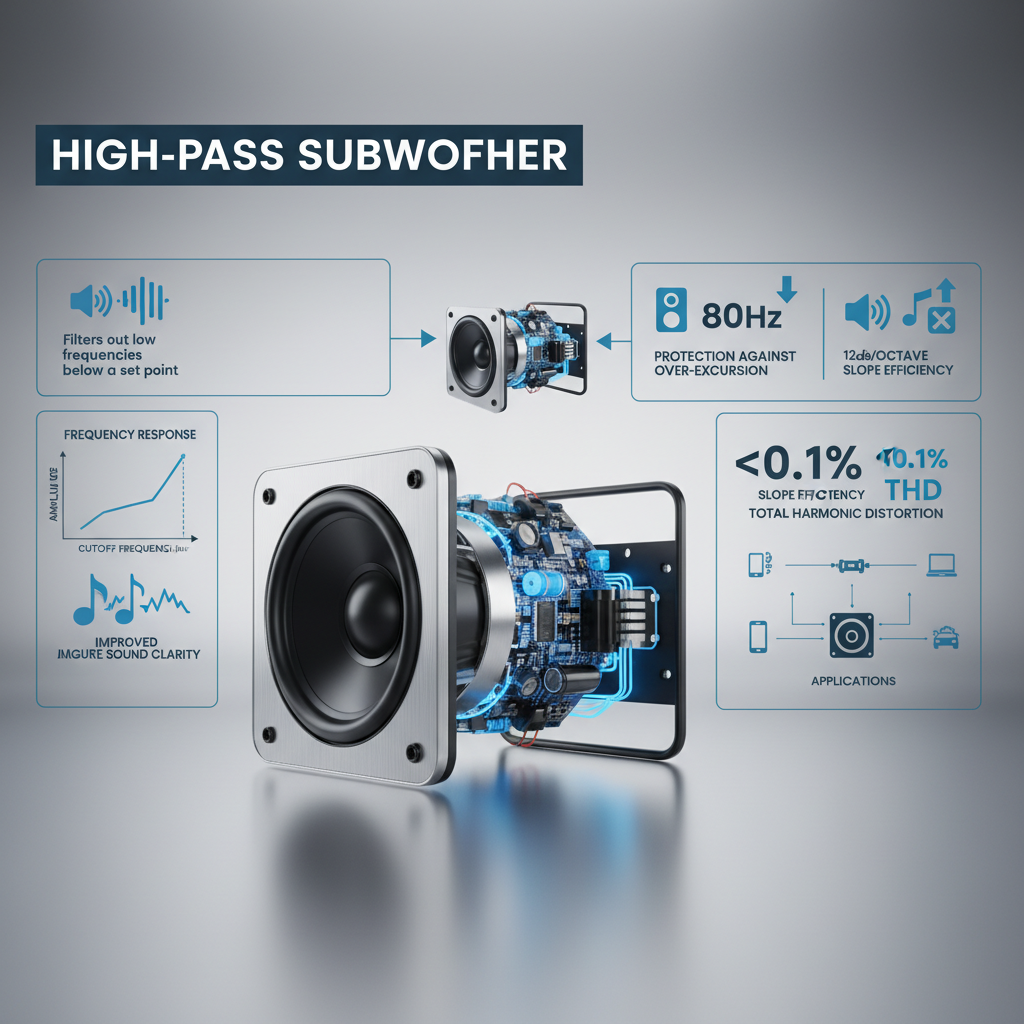
When building a high pass filter circuit, selecting high-quality components is paramount. Capacitors should have low equivalent series resistance (ESR) for optimal performance and minimal distortion. Resistors should be precision-tolerance types to ensure accurate cutoff frequency settings. For active filters, choosing low-noise operational amplifiers is crucial to minimize unwanted background noise. Furthermore, consider the power handling capabilities of the components to ensure they can safely handle the signals in your system. XCD Magnetic provides a wide range of high-performance components for building custom filter circuits.
Implementing a high pass filter subwoofer is a critical step in achieving optimal audio performance. By removing unwanted low-frequency noise, protecting the subwoofer driver, and improving overall clarity, you can unlock the full potential of your bass response. Careful consideration of the cutoff frequency and component selection will ensure a seamless integration with your existing audio system. Don’t underestimate the power of a well-implemented high pass filter – it’s a game-changer for any audio enthusiast.
If the high pass filter is set too low, it will attenuate frequencies that are essential for a full and satisfying bass response. This can result in a thin, weak, and lacking sound. The subwoofer may struggle to produce impactful bass, and the overall soundstage will feel unbalanced. Furthermore, allowing frequencies below the subwoofer's capabilities to pass through can cause distortion and potentially damage the driver over time. It's crucial to find a balance and avoid overly aggressive filtering.
While less common, it is possible to use a high pass filter on the main speakers. This is typically done in systems where the main speakers have limited low-frequency response capabilities. The purpose is to relieve them of the burden of reproducing very low frequencies, allowing them to focus on the midrange and high frequencies where they perform best. However, this requires careful adjustment to ensure a smooth transition between the main speakers and the subwoofer.
No, a high pass filter is not the same as a low pass filter. They perform opposite functions. A high pass filter allows frequencies above a certain point to pass through, while attenuating those below. A low pass filter allows frequencies below a certain point to pass through, while attenuating those above. Low pass filters are typically used on subwoofers to send only bass frequencies to the subwoofer driver, while high pass filters are used to prevent the subwoofer from reproducing unwanted low-frequency noise.
XCD Magnetic provides a comprehensive selection of high-quality components for building custom high pass filters, including precision resistors, low-ESR capacitors, and low-noise operational amplifiers. We offer components suited for both passive and active filter designs, ensuring optimal performance and reliability for your audio projects.