
Hit enter to search or ESC to close
24 March 2026
The high pass crossover subwoofer is a crucial component in audio systems, particularly for achieving optimal sound quality and protecting speakers. It filters out low-frequency sounds, allowing only higher frequencies to reach the subwoofer. This article will delve into the functionality, benefits, applications, and selection criteria for high pass crossover subwoofers. We'll explore how they contribute to a superior audio experience, especially within the context of XCD Magnetic's range of high-quality audio components.
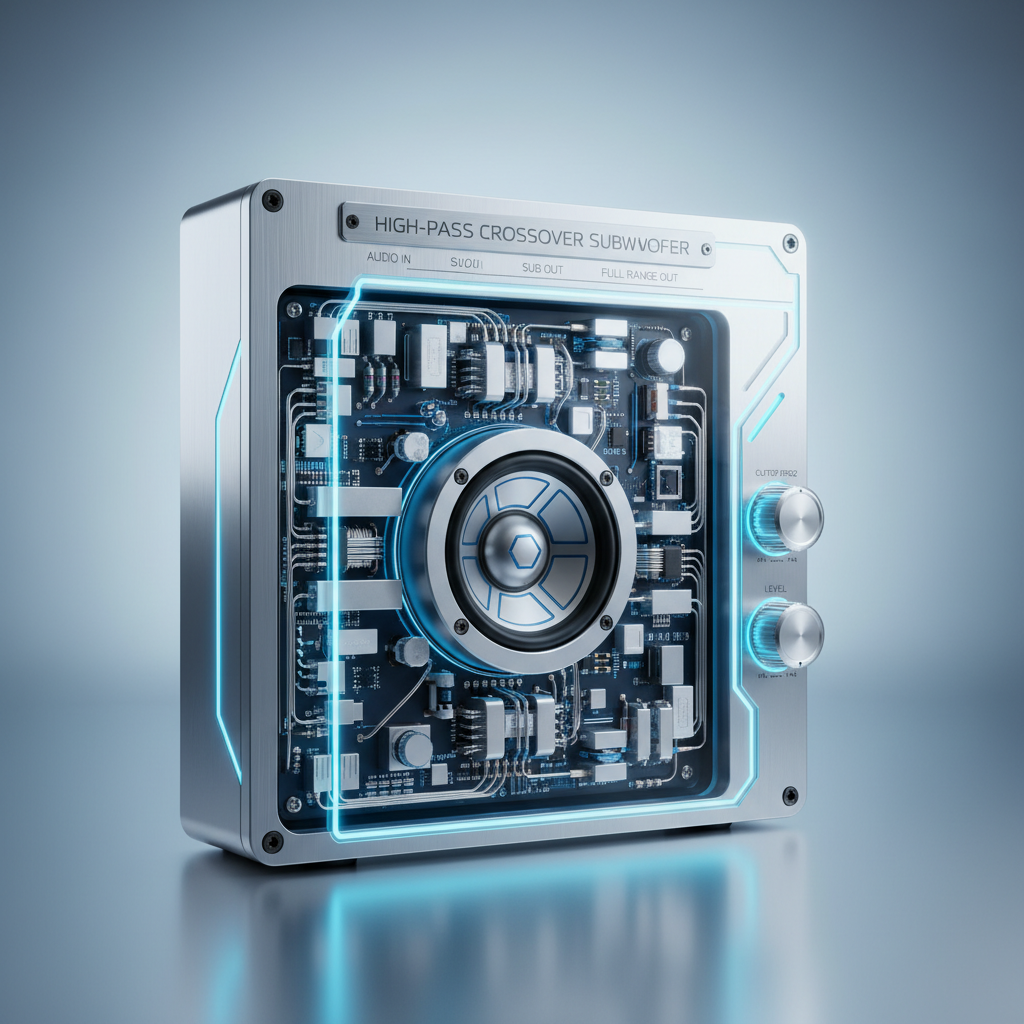
A high pass crossover, when integrated with a subwoofer system, selectively allows frequencies above a predetermined cutoff point to pass through to the subwoofer driver. Frequencies below this point are attenuated or blocked. This is vital because subwoofers are generally designed to reproduce low-frequency sounds effectively. Sending them unwanted higher frequencies can lead to distortion, damage to the driver, and a muddied overall sound. The crossover point is carefully chosen based on the subwoofer's capabilities and the overall system design. XCD Magnetic provides various crossover solutions tailored to different subwoofer specifications.
Key Benefit: Protecting your subwoofer driver from damage caused by frequencies it’s not designed to handle, resulting in a cleaner, more accurate bass response.
Selecting the correct crossover frequency is paramount. A crossover frequency that’s too low will allow unwanted mid-range frequencies to reach the subwoofer, potentially causing distortion. A crossover frequency that’s too high will limit the subwoofer’s ability to produce deep, impactful bass. The ideal crossover point depends on several factors, including the subwoofer's frequency response, the capabilities of other speakers in the system, and the listening environment. A common range for high pass crossovers with subwoofers is between 80Hz and 120Hz, but this can vary greatly.
Factors Influencing Crossover Frequency:
• Subwoofer Size and Type
• Main Speaker Capabilities
• Room Acoustics
• Personal Listening Preferences
There are two main types of high pass crossover systems: passive and active. Passive crossovers are comprised of electronic components like capacitors, inductors, and resistors, and are placed between the amplifier and the subwoofer. They require no external power. Active crossovers, on the other hand, utilize electronic circuitry and require an external power source. They are typically implemented in amplifiers with built-in crossover controls or as separate electronic crossover units. Active crossovers offer greater precision and flexibility in crossover frequency and slope adjustments. XCD Magnetic specializes in components suitable for both passive and active crossover designs.
The use of a high pass crossover subwoofer is prevalent across various audio setups. In home theater systems, it ensures that the subwoofer handles only the low-frequency effects, leaving the mid and high frequencies to the main speakers. In car audio systems, it optimizes the bass response and protects the subwoofer from damage. Professional sound reinforcement systems also rely heavily on high pass crossovers for precise frequency control and optimal sound quality. The components supplied by XCD Magnetic are utilized in diverse audio applications, ensuring consistent performance and reliability.
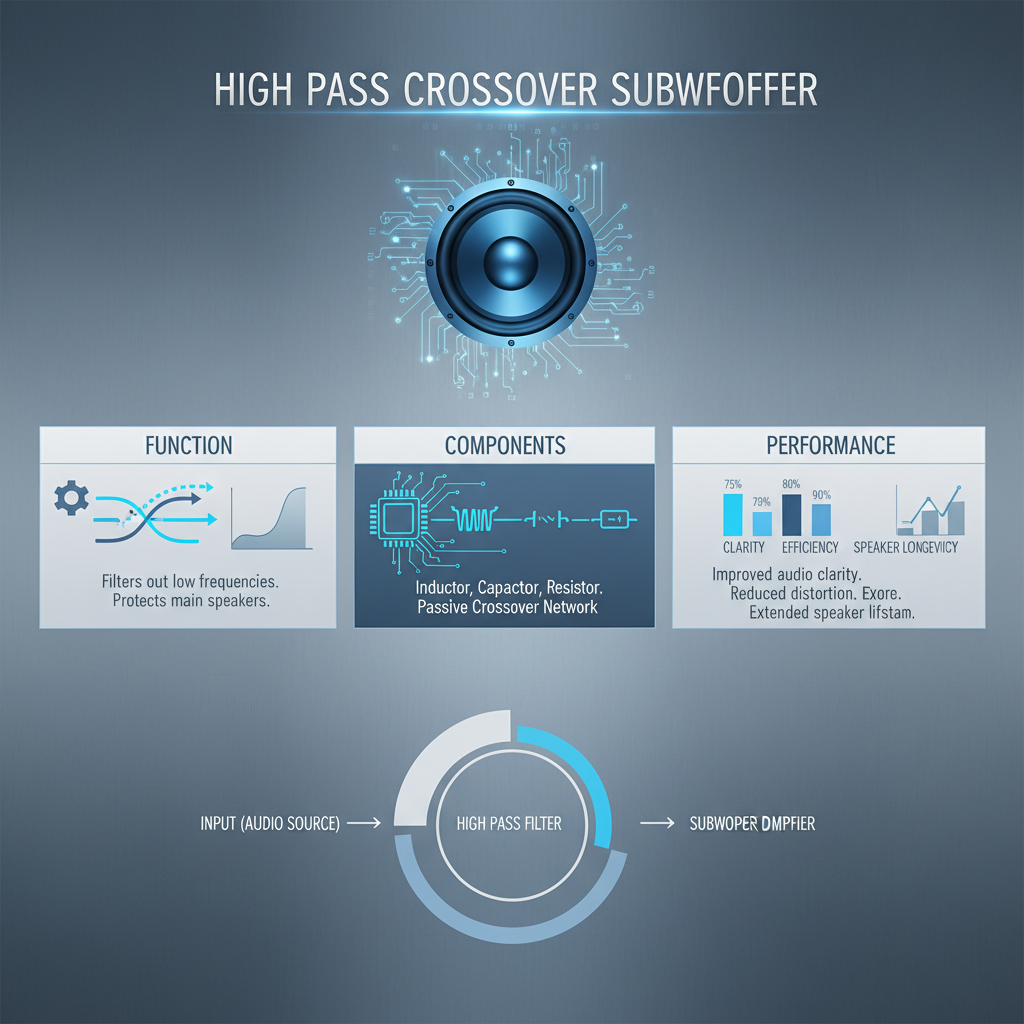
When building or upgrading your high pass crossover subwoofer system, selecting high-quality components is crucial. XCD Magnetic offers a wide range of precision capacitors, inductors, and resistors specifically designed for crossover applications. We focus on materials and construction that minimize distortion and ensure optimal signal transfer. Our website features detailed product specifications and support to help you choose the right components for your specific needs.
A properly implemented high pass crossover subwoofer system is critical for achieving optimal sound quality and protecting your valuable speakers. By understanding the principles of crossover design and selecting high-quality components from XCD Magnetic, you can unlock the full potential of your audio system.
The slope determines how aggressively frequencies below the cutoff point are attenuated. Common slopes are 6dB/octave (first-order), 12dB/octave (second-order), 18dB/octave (third-order), and 24dB/octave (fourth-order). Higher slopes provide steeper attenuation, offering greater protection to the subwoofer but potentially introducing phase shifts. A 12dB/octave or 18dB/octave slope is often a good starting point for subwoofer applications. The ideal slope depends on the specific subwoofer and speaker characteristics, as well as personal preference. Experimentation is often required to find the optimal setting.
Yes, you can use a high pass crossover with both sealed and ported subwoofer enclosures. However, the optimal crossover frequency might differ slightly. Ported enclosures generally require a lower crossover frequency compared to sealed enclosures due to their greater efficiency at lower frequencies. Careful consideration of the enclosure's tuning frequency is essential when selecting the crossover point.
Impedance, measured in ohms, plays a critical role in crossover design. The crossover components must be matched to the impedance of both the subwoofer and the amplifier. Mismatched impedances can lead to reduced power transfer, distortion, and even damage to the amplifier. Subwoofers typically have a nominal impedance of 4 or 8 ohms. The crossover components must be designed to handle the specified impedance load.
Detailed specifications for all of XCD Magnetic’s crossover components, including capacitors, inductors, and resistors, are readily available on our website: www.xcdmagnetic.com. You can find datasheets, impedance curves, and other technical information to help you make informed decisions for your crossover design.