
Hit enter to search or ESC to close
6 February 2026
Choosing the right components for your audio setup can be daunting. A properly configured crossover speaker subwoofer system is crucial for optimal sound quality and performance. This article will delve into the intricacies of crossover networks, subwoofer integration, and how to select the best components for your needs. We’ll explore the principles behind these systems, helping you understand how to achieve a balanced and impactful audio experience. Ensuring proper integration allows for clear, powerful audio reproduction across the entire frequency spectrum.
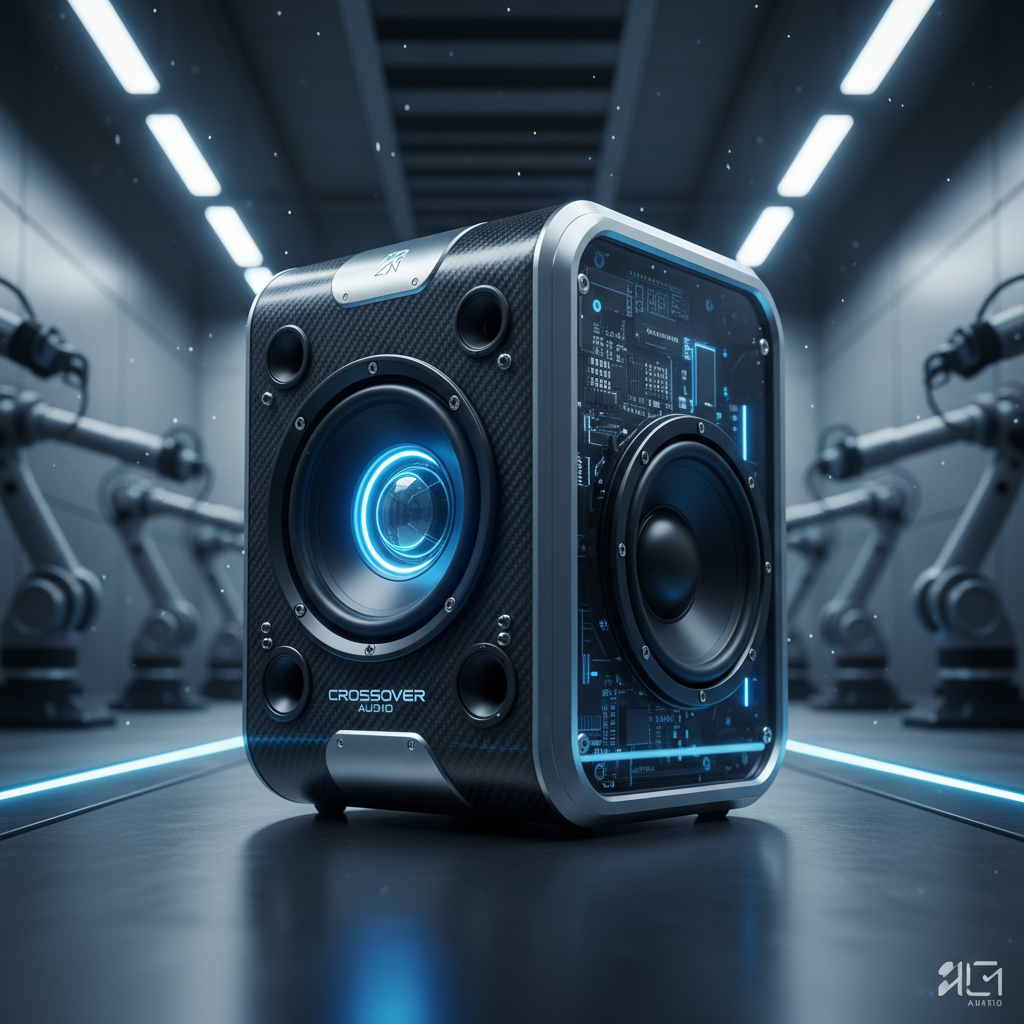
A crossover speaker subwoofer system directs different frequency ranges to the appropriate speakers. Speakers are not equally efficient at reproducing all frequencies; a tweeter excels at high frequencies, a midrange driver handles vocals and instruments, and a subwoofer is designed for low frequencies. The crossover network acts as a filter, ensuring that each driver receives only the frequencies it's best equipped to handle. This prevents distortion, improves clarity, and maximizes the overall sound quality. Without a crossover, the full frequency range would be sent to all speakers, resulting in muddied and inefficient sound reproduction. XCD Magnetic provides high-quality components for building these critical systems.
Key Highlights: A crossover network ensures each driver receives the frequencies it's designed to reproduce efficiently, resulting in clearer, more accurate sound.
Crossovers come in two main types: passive and active. Passive crossovers are placed between the amplifier and the speakers, using capacitors, inductors, and resistors to filter the signal. They are simpler to implement and require no external power, but they can be less precise and introduce some signal loss. Active crossovers, on the other hand, are placed before the amplifier, requiring an amplifier channel for each frequency band. They offer greater control and precision, allowing for more sophisticated filtering and equalization. Active crossovers typically require more complex setup and additional amplification.
Crossover Type Comparison:
• Passive: Simple, no external power needed, some signal loss.
• Active: Precise control, requires more amplification, more complex setup.
Properly integrating a subwoofer with the rest of your system is essential for achieving a seamless and balanced sound. The crossover point – the frequency at which the signal is split between the main speakers and the subwoofer – is critical. A common crossover point for subwoofers is between 80Hz and 120Hz, but the optimal setting depends on your speakers, room acoustics, and personal preferences. Lower crossover points place more strain on the subwoofer but may provide a smoother transition. Experimenting with different settings is key to finding the sweet spot. XCD Magnetic's components can help you tailor your subwoofer's performance.

Selecting high-quality crossover components is crucial for achieving optimal performance. Capacitors, inductors, and resistors all play a vital role in shaping the frequency response. Look for components with low tolerances and high-quality materials. For passive crossovers, consider the power handling capacity of the components to ensure they can withstand the signal from your amplifier. For active crossovers, the quality of the analog-to-digital and digital-to-analog converters (ADCs/DACs) is paramount. Investing in quality components from reputable manufacturers, such as XCD Magnetic, will significantly improve the overall sound of your system.
The world of audio technology is constantly evolving. Digital Signal Processing (DSP) is becoming increasingly prevalent, allowing for highly customizable and precise crossover filtering. Room correction technologies are also improving, enabling systems to compensate for acoustic imperfections and optimize the sound for the specific listening environment. Advancements in subwoofer technology, such as powered subwoofers with built-in amplifiers and DSP, are making it easier than ever to achieve powerful and accurate bass reproduction.
A well-designed crossover speaker subwoofer system is the foundation of any great audio experience. Understanding the principles of crossover networks, subwoofer integration, and component selection is crucial for achieving optimal sound quality. By investing in high-quality components and taking the time to properly configure your system, you can unlock the full potential of your audio setup.
The ideal crossover frequency depends on your specific speakers and listening environment. However, a common starting point is between 80Hz and 120Hz. Experimenting within this range is crucial. Lower frequencies generally provide a smoother transition but may require more power from the subwoofer. Consider the frequency response of your main speakers; the crossover point should be set below the lowest frequency they can reproduce effectively. It’s also beneficial to consider room acoustics; larger rooms may benefit from slightly lower crossover frequencies.
Active crossovers offer several advantages over passive crossovers, including greater precision, flexibility, and control. They allow for independent control of each frequency band, enabling you to fine-tune the sound to your specific preferences. Active crossovers also minimize signal loss and can be used with equalization to correct for room acoustics or speaker deficiencies. However, they require an amplifier channel for each frequency band, increasing the overall system complexity and cost.
Room size significantly impacts subwoofer performance. Larger rooms require more powerful subwoofers and potentially multiple subwoofers to distribute the bass evenly. Smaller rooms may benefit from lower crossover frequencies and more careful subwoofer placement to avoid excessive boominess. Room acoustics also play a role; reflective surfaces can create standing waves, while absorbent materials can reduce bass response. Experimenting with different subwoofer positions and crossover settings is essential to optimize performance for your specific room.