
Hit enter to search or ESC to close
9 April 2026
For audiophiles and home cinema enthusiasts, achieving the perfect sonic balance is often a journey of trial and error. One of the most effective ways to elevate your audio experience is by integrating a home stereo active crossover into your signal chain. Unlike traditional passive systems, an active crossover splits the audio signal before it reaches the amplifiers, allowing for precise control over frequency distribution. This results in reduced distortion, increased efficiency, and a breathtakingly clear soundstage. In this guide, we will explore how this technology transforms ordinary listening into a professional studio-grade experience.
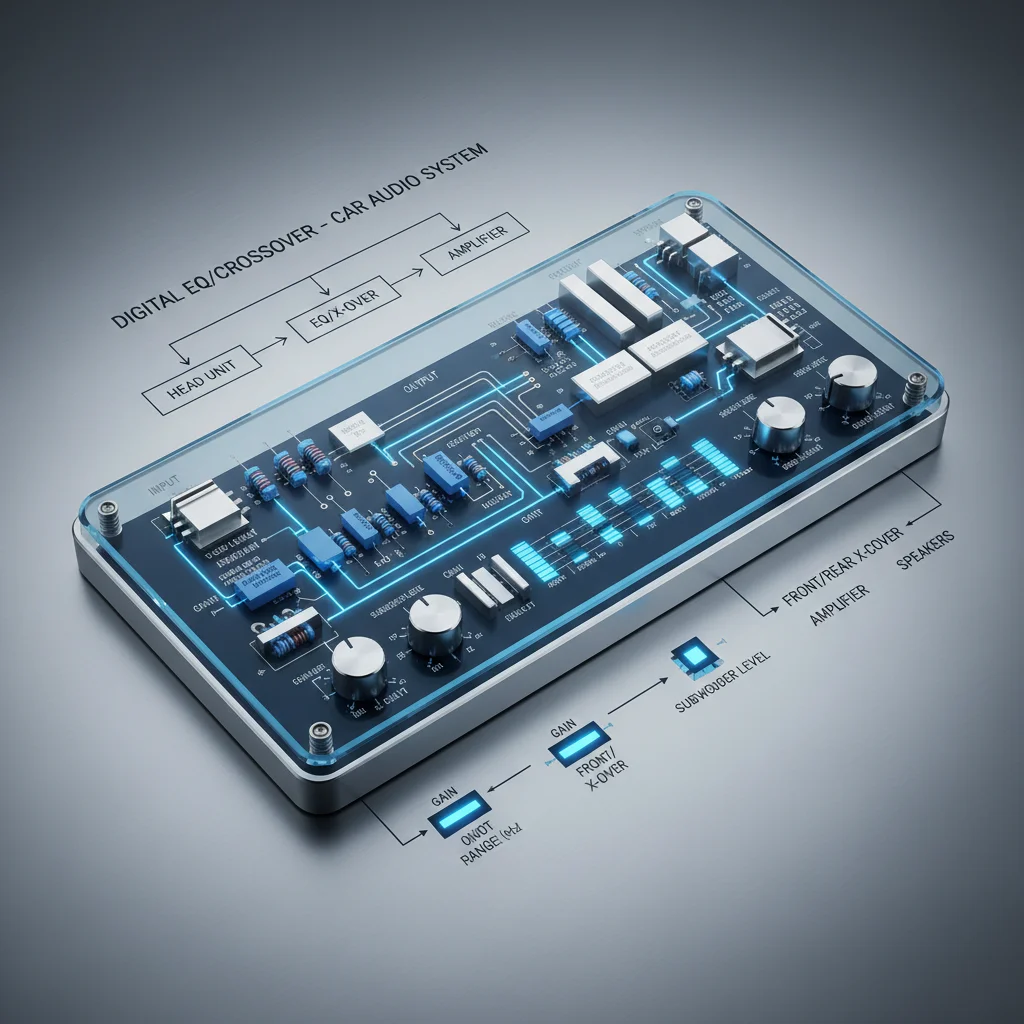
An active crossover acts as the "traffic controller" of your audio system. It takes the full-range signal from your preamp and divides it into separate frequency bands—typically lows (woofers), mids (mid-range drivers), and highs (tweeters). Because the home stereo active crossover operates at a low voltage level, it doesn't suffer from the energy loss associated with passive capacitors and inductors. This means each amplifier in your system only has to handle the specific frequencies it was designed for, preventing "muddy" bass from leaking into your highs and ensuring maximum amplifier efficiency.
Pro Tip: By separating the frequencies early, you eliminate the risk of sending low-frequency energy to your tweeters, which is the leading cause of driver failure in high-volume setups.
The debate between active and passive systems often comes down to a choice between convenience and performance. Passive crossovers are built into the speaker cabinet, requiring only one amplifier. However, a home stereo active crossover provides a level of customization that is simply impossible with passive components. You can adjust the crossover point in real-time to match the acoustics of your room, resulting in a tighter bass response and a more transparent midrange.
When you switch to a home stereo active crossover, you are essentially giving yourself a professional toolkit for sound sculpting. The most immediate benefit is the reduction of Intermodulation Distortion (IMD). Since the woofer is no longer trying to process high-frequency signals, the cone movement is more precise, resulting in bass that feels "tight" rather than "boomy." Additionally, you can tailor the gain for each driver individually, allowing you to balance the volume of your tweeters against your woofers to suit your seating position perfectly.
Setting up an active system requires a bit more planning than a plug-and-play setup. First, you must identify the ideal crossover point—the frequency where your woofer stops and your tweeter begins. For most high-fidelity systems, this is between 2kHz and 3kHz. Using a high-quality home stereo active crossover allows you to experiment with these points to find the "sweet spot" in your specific room. Remember to use shielded cables to prevent electromagnetic interference from the multiple amplifiers required for an active setup.
Not all active crossovers are created equal. When shopping for a home stereo active crossover, you should look for specific technical parameters that ensure audio transparency. The slope of the crossover (measured in dB per octave) is critical; a steeper slope (e.g., 24dB/octave) provides a cleaner cut between drivers, reducing overlap. Below is a specification table of what to look for in a professional-grade unit:
A common myth is that using a home stereo active crossover is "too complicated" for the average home user. While it does require more cabling and multiple amplifiers, the modern interface of high-end crossovers makes them intuitive to use. Another misconception is that active systems are only for huge cinema rooms. In reality, active crossovers are incredibly effective in small rooms where standing waves and bass buildup are problematic; by precisely tuning the crossover, you can minimize these acoustic issues and achieve a balanced sound in any environment.
Investing in a home stereo active crossover is one of the most significant upgrades an audiophile can make. By separating the labor of amplification and providing surgical control over frequency distribution, you unlock the true potential of your speakers. Whether you are building a high-end listening room or a home theater, the active approach ensures clarity, power, and a personalized sound signature. Stop settling for "good enough" and experience the precision of active sound management.
Yes, that is the defining characteristic of an active system. Because the home stereo active crossover splits the signal before amplification, each resulting signal path must be amplified separately. For a two-way system, you would need one amplifier (or channel) for the woofers and one for the tweeters. This allows you to use different amplifier classes—such as a high-current Class D amp for bass and a transparent Class A amp for highs—to optimize the sound of each driver.
Not directly. Passive speakers have a built-in passive crossover that would interfere with the signal from an active crossover. To use an active system, you must "bypass" the internal passive crossover by wiring the drivers directly to the amplifier terminals. This is a common modification for audiophiles, but it requires some basic soldering and electrical knowledge. Once the passive components are removed, the home stereo active crossover takes full control of the frequency distribution.
The crossover point is the specific frequency where the signal transitions from one driver to another. Choosing the right point depends on the physical capabilities of your drivers. If you set it too low, you might overstress your tweeters with low-frequency energy; too high, and your woofers may struggle to produce clear midrange. Most home stereo active crossover units allow you to sweep through frequencies to find where the transition sounds most seamless and natural in your room.
Absolutely. By using an active crossover, you can implement a "High Pass Filter" on your mid-range and high-frequency drivers, ensuring they don't attempt to play bass frequencies. This frees up the woofer to handle the low end exclusively without interference. Additionally, because you have dedicated amplification for the bass, you can increase the power to the woofers without risking distortion in the tweeters, leading to a much more impactful and defined low-end response.