
Hit enter to search or ESC to close
21 March 2026
For audiophiles and sound engineers, the quality of a speaker isn’t solely determined by the drivers themselves. A crucial, often overlooked component is the high end speaker crossover. This network of components directs frequencies to the appropriate drivers – woofers, tweeters, and midranges – ensuring accurate sound reproduction. Choosing the right crossover is essential for optimizing speaker performance and achieving a truly immersive listening experience. We’ll explore the critical aspects of these components, their types, and how they impact sound quality.
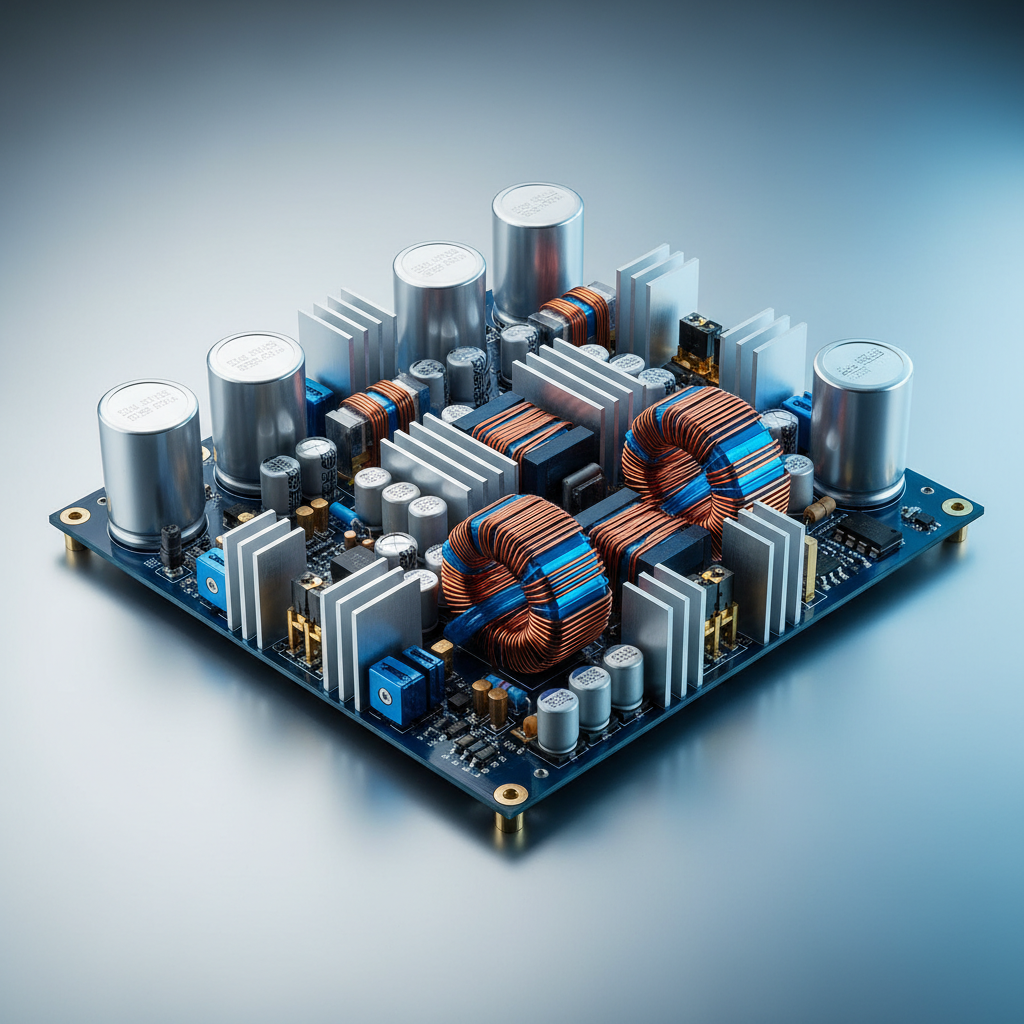
Simply put, a speaker crossover is an electronic circuit that divides the audio signal into different frequency ranges. Each range is then sent to the driver best equipped to reproduce it. Woofers handle low frequencies (bass), tweeters manage high frequencies, and midranges cover the middle frequencies. High end speaker crossovers are built with premium components – often air-core inductors, polypropylene or film capacitors, and precision resistors – to minimize signal loss and distortion. This results in a cleaner, more accurate, and detailed sound. Without a crossover, all frequencies would be sent to all drivers, leading to muddiness and potentially damaging the drivers.
Key Benefits: Minimal signal loss, reduced distortion, accurate frequency division, improved sound clarity, and driver protection.
There are several types of speaker crossovers, each with its own characteristics. The most common are passive crossovers, active crossovers, and Linkwitz-Riley crossovers. Passive crossovers are the most prevalent in consumer speakers and are placed inside the speaker cabinet. They require no external power. Active crossovers, on the other hand, are external and require power. They split the signal before it reaches the amplifier, allowing for more precise control and potentially higher fidelity. Linkwitz-Riley crossovers are known for their smooth frequency response and minimal phase distortion, often favored by discerning audiophiles.
Crossover Type Comparison:
• Passive: Simple, no external power, cost-effective.
• Active: Precise control, higher fidelity, requires external power.
• Linkwitz-Riley: Smooth response, minimal phase distortion, complex implementation.
The quality of the components used in a high end speaker crossover significantly impacts its performance. Air-core inductors, for example, introduce less distortion than iron-core inductors. Film capacitors generally offer better sonic performance than electrolytic capacitors. Precision resistors ensure accurate frequency division. Using lower-quality components can introduce unwanted noise, coloration, and reduced clarity. Investing in a crossover built with premium components is a direct investment in sound quality.
Selecting the correct crossover depends on several factors, including the speaker drivers, enclosure design, and your listening preferences. A well-designed crossover complements the strengths of the drivers and minimizes their weaknesses. Consider the crossover’s slope (the rate at which frequencies are attenuated), the crossover frequency (the point where frequencies are divided), and the overall impedance of the crossover. XCD Magnetic provides custom crossover design and manufacturing services to ensure optimal performance for your specific speakers.
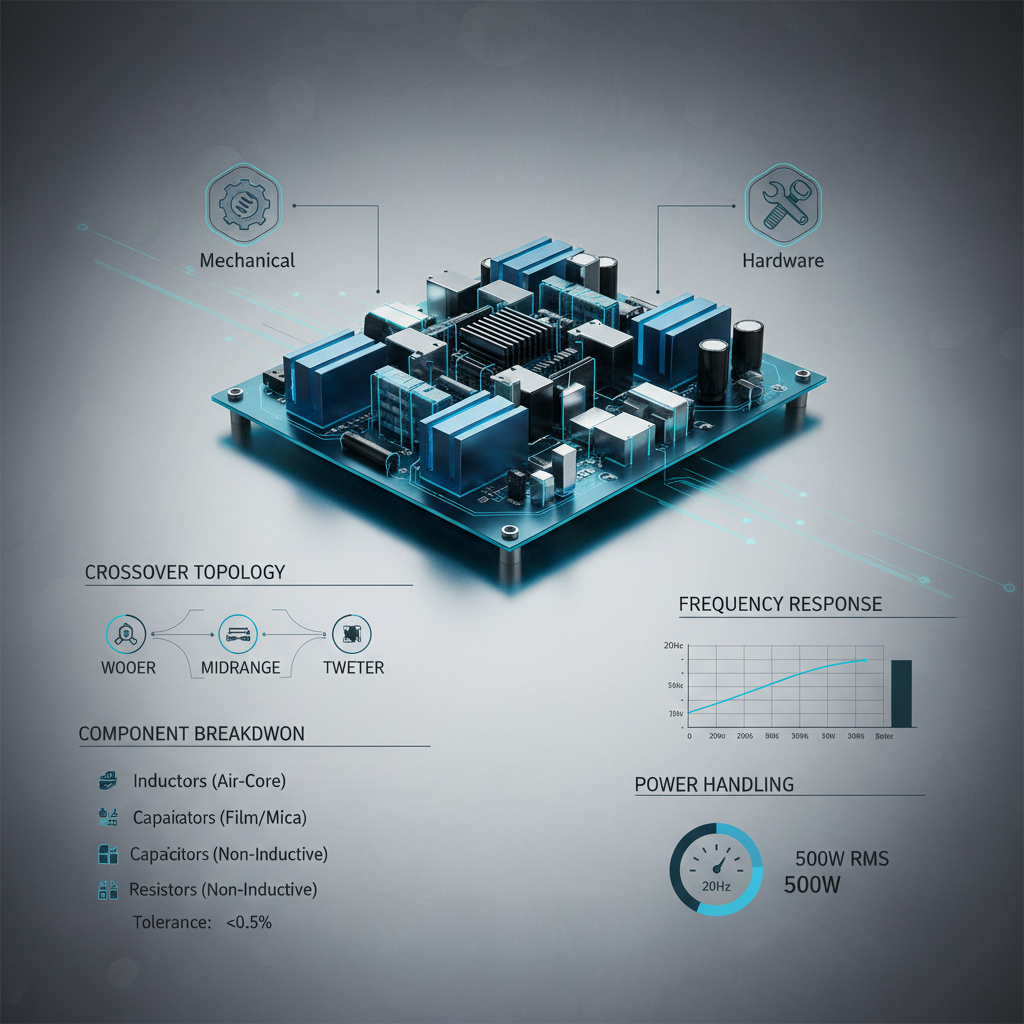
The high end speaker crossover is a critical component in any audio system. Understanding its function, the different types available, and the importance of component quality can dramatically improve your listening experience. Investing in a well-designed crossover is an investment in sonic accuracy, clarity, and overall enjoyment.
The ideal crossover frequency for a two-way speaker depends heavily on the specific drivers used. Generally, frequencies between 2kHz and 3kHz are common starting points. However, factors like the woofer's cone breakup characteristics and the tweeter's sensitivity play crucial roles. Lower crossover frequencies can stress the tweeter, while higher frequencies may result in off-axis beaming. Careful measurements and listening tests are required to determine the optimal frequency for a given driver combination. A well-designed crossover will smoothly integrate the drivers for a seamless soundstage.
Yes, it's possible to build your own speaker crossover, but it requires a good understanding of electronics, circuit design, and speaker parameters. You'll need to calculate the appropriate component values based on the drivers' specifications and desired crossover characteristics. It also requires soldering skills and access to quality components. While rewarding, building a crossover can be time-consuming and potentially lead to suboptimal results if not done correctly. Using a reputable crossover design service or purchasing a pre-built crossover from a trusted manufacturer like XCD Magnetic is often a more reliable option.
The “order” of a crossover refers to the slope of attenuation in dB per octave. A 1st order crossover attenuates frequencies at 6dB per octave, offering a gentle roll-off. A 2nd order crossover attenuates at 12dB per octave, providing a steeper roll-off and better driver protection. Higher-order crossovers (3rd, 4th, etc.) offer even steeper slopes, but can introduce phase distortion. Generally, 2nd order crossovers are a good balance between performance and complexity for most two-way systems. The choice depends on the specific driver characteristics and desired sound quality.