
Hit enter to search or ESC to close
7 March 2026
Achieving optimal sound quality in your car audio system often goes beyond simply upgrading speakers and amplifiers. A crucial component frequently overlooked is the equalizer crossover. This device precisely directs audio frequencies to the appropriate speakers, maximizing efficiency and clarity. This guide delves into the world of equalizer crossovers, exploring their function, types, benefits, and how to choose the right one for your car audio setup. Understanding these components is key to unlocking the full potential of your system and creating a truly immersive listening experience.
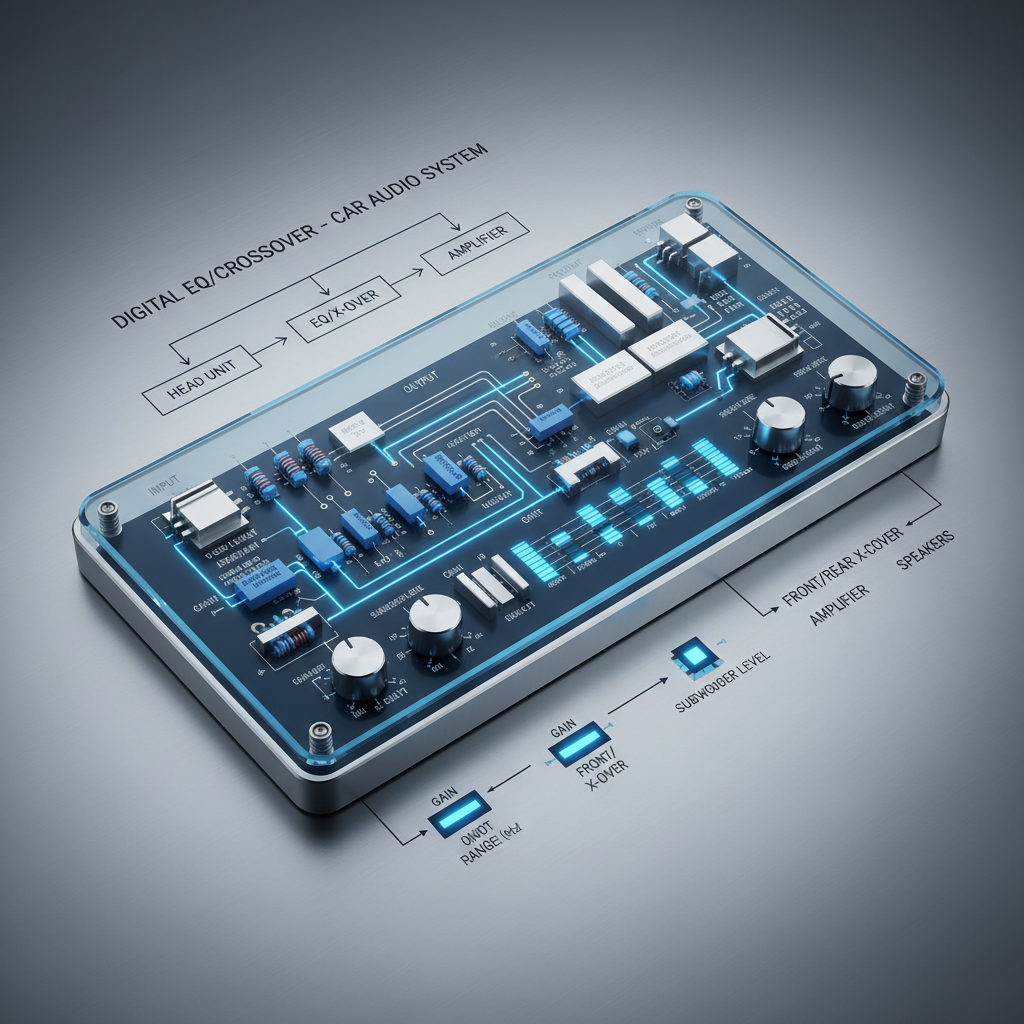
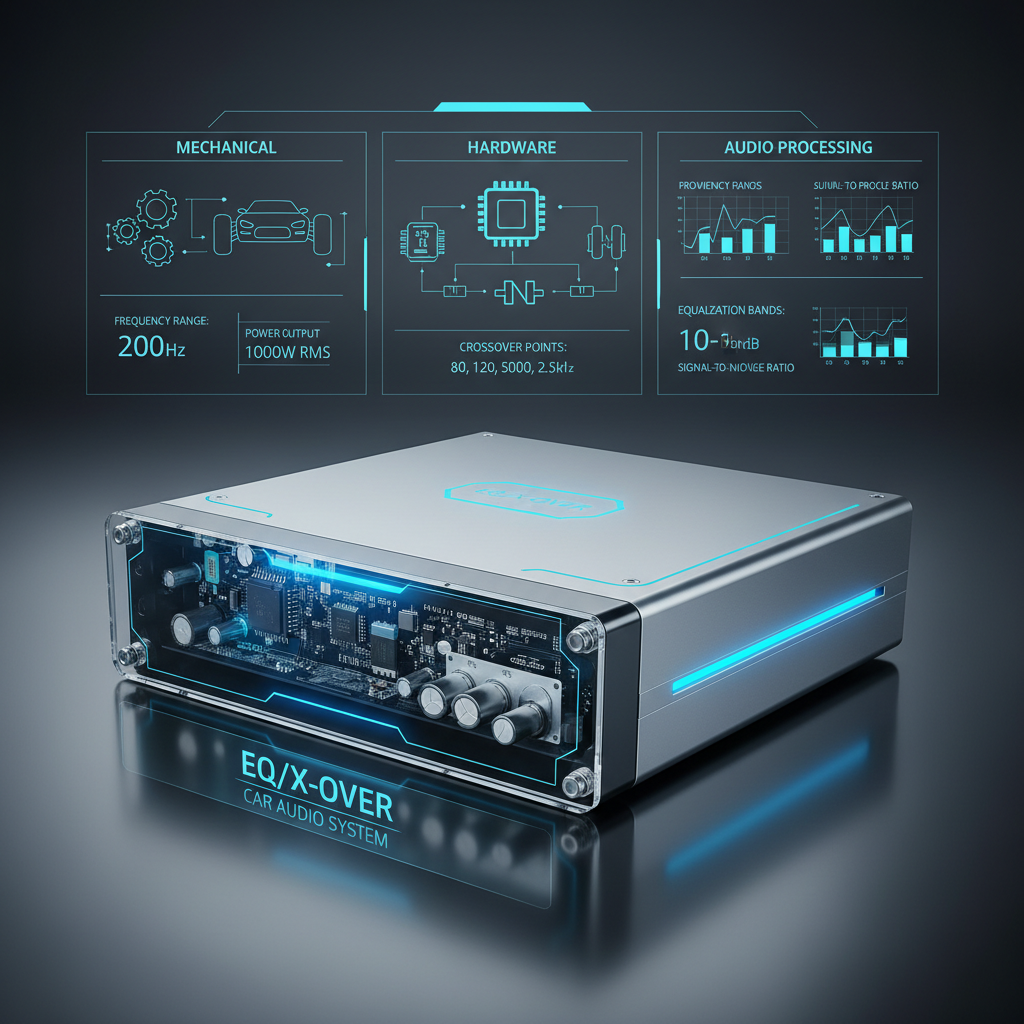
An equalizer crossover is an electronic circuit that divides the audio signal into different frequency ranges, then sends each range to the speaker best equipped to reproduce it. Think of it as a traffic controller for sound. Lower frequencies (bass) are sent to subwoofers, mid-range frequencies to mid-bass drivers, and higher frequencies (treble) to tweeters. Without a crossover, all frequencies would be sent to all speakers, resulting in muddy, distorted sound and potential speaker damage. Effective crossovers ensure that each speaker operates within its optimal frequency response range, enhancing overall sound clarity and preventing distortion. XCD Magnetic offers a diverse range of high-quality equalizer crossovers designed to meet various car audio needs.
Key Benefit: By directing frequencies accurately, crossovers optimize speaker performance and prevent damage, leading to a more balanced and powerful sound.
There are several types of equalizer crossovers, each with its own characteristics and applications. The main types include:
Crossover Type Comparison:
• Passive: Affordable, simple, but less precise.
• Active: More precise, greater control, requires power.
• DSP: Highest control, advanced features, most expensive.
Selecting the appropriate crossover depends on your budget, system complexity, and desired level of control. For a basic system upgrade, a passive crossover might suffice. However, if you're building a high-performance system with separate amplifiers for each speaker type, an active crossover or DSP is highly recommended. Consider these factors:
Implementing an equalizer crossover into your car audio system yields numerous benefits:
Investing in the right equalizer crossover is a crucial step towards achieving exceptional car audio quality. Whether you opt for a simple passive crossover or a sophisticated DSP, the benefits are undeniable. Properly implemented, a crossover will enhance sound clarity, optimize speaker performance, and elevate your overall listening experience. Explore the range of high-quality equalizer crossovers available at XCD Magnetic today!
Investing in the right equalizer crossover ensures optimal sound clarity and protects your investment in speakers. Explore the high-quality options available at XCD Magnetic.
The ideal crossover point for a subwoofer typically falls between 80Hz and 120Hz. Lower crossover points (e.g., 80Hz) allow more frequencies to be handled by the subwoofer, providing deeper bass. However, this can sometimes result in a muddy sound if the subwoofer isn't capable of accurately reproducing those frequencies. Higher crossover points (e.g., 120Hz) can provide tighter, more defined bass, but might leave a gap in the mid-bass frequencies. The best crossover point depends on your subwoofer's specifications and your personal preference. Experimentation is key to finding the sweet spot.
The order of a crossover refers to the steepness of the filter. A 1st-order crossover has a slope of 6dB/octave, meaning it attenuates frequencies more gradually. A 2nd-order crossover has a slope of 12dB/octave, providing a steeper attenuation. Higher-order crossovers offer better separation between speakers but can introduce more phase distortion. Generally, 2nd-order crossovers are a good balance between separation and sound quality.
Not necessarily. Often, a single crossover can be used to split the signal for multiple speakers, such as tweeters and mid-bass drivers. However, if you’re using multiple amplifiers and want precise control over each speaker’s frequency response, using separate crossovers for each speaker type is recommended. This is particularly common in high-end systems utilizing active crossovers or DSPs.
The crossover's impedance must match the impedance of your speakers. Most car speakers are 4 ohms, but some are 2 ohms or 8 ohms. Using a crossover with the wrong impedance can result in reduced power output or even damage to your speakers or amplifier. Consult the specifications of both your speakers and crossover to ensure compatibility.